
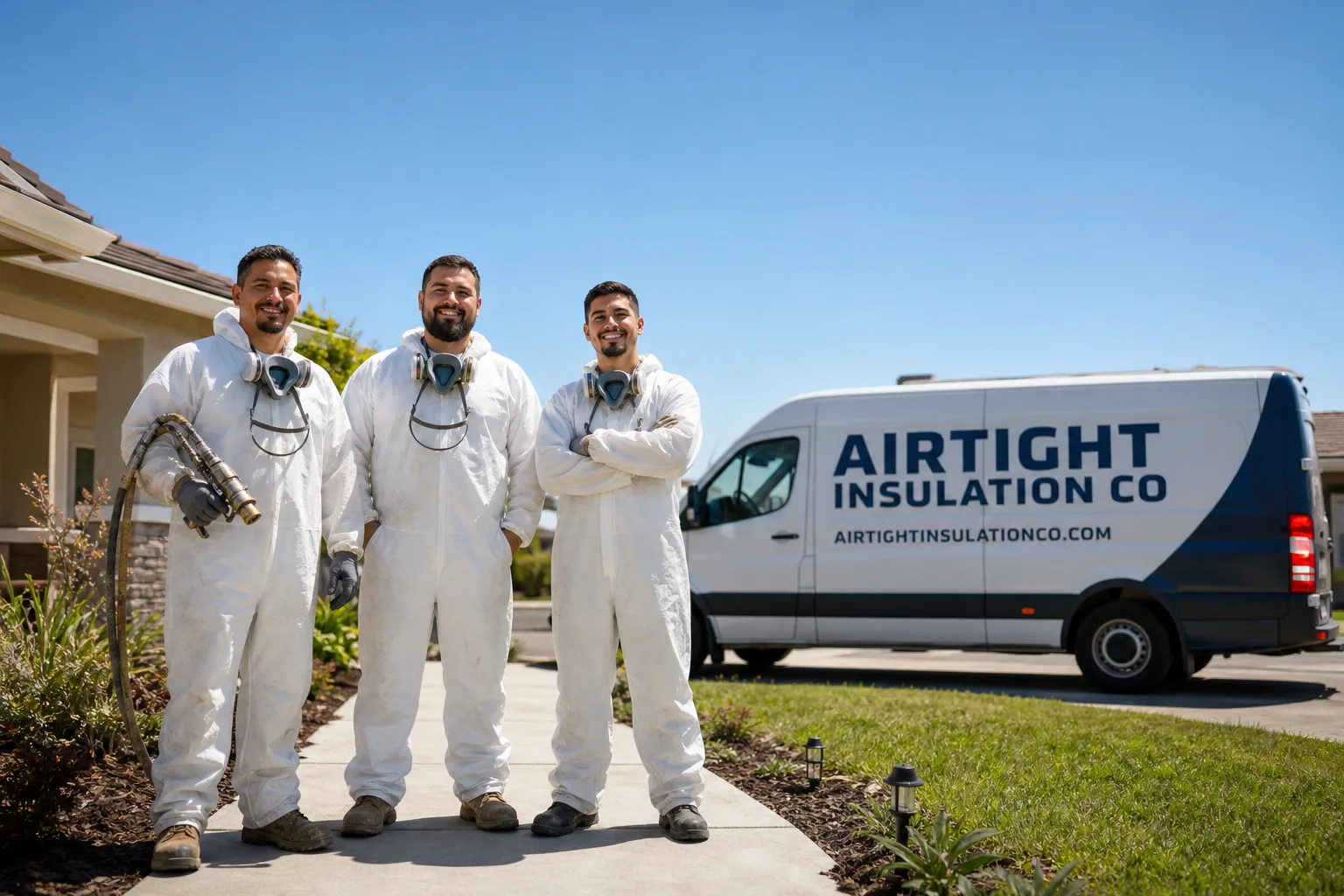
Fast, Reliable Spray Foam Insulation Across Sierra Madre
Spray foam insulation in Sierra Madre typically costs $3.50 – $7.50 per board foot installed, with most attic jobs landing between $2,800 and $6,500 depending on square footage and foam type. We run crews into Sierra Madre from our Las Flores shop regularly, so scheduling is usually a matter of days, not weeks. Ruben Acosta leads every Sierra Madre project personally, and our team knows the 91024 and 91025 zip codes well enough to anticipate what your attic actually needs before we even open the hatch. If you’ve been fighting a hot upstairs, uneven cooling, or dust blowing through old wall cavities, call (833) 390-7079 and we’ll tell you straight what’s going on.
Why Airtight Insulation Co Is Sierra Madre’s Preferred Spray Foam Insulation Company
We’ve spent enough time in Sierra Madre attics to know what the canyon does to a house. The afternoon heat stacks up against the foothills, then the evening air rolls down off the San Gabriels and drops the temperature 20 degrees in two hours. That swing punishes insulation that was never designed for it, and it’s why we don’t treat Sierra Madre like a generic Los Angeles suburb. When we quote a job on a 1920s Craftsman off Baldwin Avenue or a ranch on a hillside street climbing toward the Angeles National Forest, we’re already thinking about how that specific house breathes. Ruben has walked more of these attics than he can count, and his read on a structure dictates which foam, which depth, and which venting strategy we propose.
We stock Icynene and Demilec spray foam products specifically because they cover both open-cell and closed-cell applications, which matters when one Sierra Madre house needs air sealing in a crawlspace and the next needs structural rigid insulation against a roof deck. Sierra Madre homeowners call us because the previous contractor defaulted to fiberglass batts and the upstairs never stopped baking. We don’t do that. We let the job pick the product.
Closed Cell Spray Foam Insulation in Sierra Madre
Closed Cell Spray Foam Insulation is the go-to for Sierra Madre attics where the roof deck itself is the thermal boundary, because it adds structural rigidity and stops air movement dead, and it’s what we reach for first on hillside homes where afternoon sun hammers the roof plane. In Sierra Madre, closed-cell runs $4.50 – $7.50 per board foot, and a typical 800-square-foot roof deck application lands between $3,600 and $6,000. The two-inch layer we often specify delivers about R-14 and, more importantly, it kills the air exchange that makes older homes feel drafty at night after a 90-degree afternoon.
When the Roof Deck Carries the Load
On Sierra Madre homes with uninsulated attic floors and gable vents, closed-cell on the underside of the roof deck converts the attic into a conditioned space. That’s the right call when ductwork runs through the attic, because you stop cooking the conditioned air before it reaches the rooms. The canyon’s steep daily temperature swing makes this configuration especially effective here because the roof deck is where the heat enters first.
Vented-Side Applications for Canyon Air
A vented-side detail matters on Sierra Madre attics that rely on cross-ventilation to flush afternoon heat. We spray closed-cell against the hot attic side while leaving the ridge and gable path open so the evening mountain air can still exhaust. That’s not a generic spray job, it’s a deliberate air-management plan, and it’s the difference between a house that cools down at night and one that holds the day’s heat until midnight.
Open Cell Spray Foam in Sierra Madre
Open Cell Spray Foam is the more cost-effective Sierra Madre option when the priority is sound control and air sealing in interior wall cavities or vented attics, and it runs $2.00 – $3.50 per board foot installed. For a typical 1,200-square-foot attic floor in Sierra Madre, expect to pay between $2,400 and $4,200. Open-cell expands to nearly 100 times its liquid volume, so it fills the irregular cavities in lath-and-plaster walls and stops air movement through stud bays that have been leaking for 80 years.
Filling Old Wall Cavities Without Opening Walls
Sierra Madre’s pre-war bungalows have wall cavities that no batt ever fit properly. Open-cell gets injected into those bays from the exterior or through small interior access points, expanding to fill the odd shapes and blocking the air paths that make rooms drafty in winter and dusty all year. It’s the retrofit-friendly solution for homes where gutting to the studs isn’t on the table.
Sound Control Between Canyon-Side Rooms
When a Sierra Madre home sits close to a canyon road or a neighbor’s roofline, open-cell’s density also dampens exterior noise. We’ve used it on hillside lots where sound carries off the foothills and into bedroom walls. You get the air-sealing benefit plus a quieter room, which matters more on steep lots where houses sit shoulder to shoulder.
Trusted Brands We Service in Sierra Madre
Airtight Insulation Co stocks and installs eight manufacturer brands, so we don’t have to stretch one product line to fit every Sierra Madre house. Our spray foam work runs through Icynene and Demilec, which covers both open-cell and closed-cell formulations with warranty-backed material. When a Sierra Madre job calls for something other than foam, we pull from Owens Corning, Johns Manville, Knauf, Rockwool, CertainTeed, and GreenFiber. That range means your recommendation comes from what the house needs, not what’s on the truck. If you need a hybrid approach like closed-cell on the roof deck and blown-in cellulose over the attic floor, our Spray Foam Insulation team handles it under one contract.
Common Spray Foam Insulation Problems We See in Sierra Madre Homes
- Foam sprayed over gable vents on canyon-mouth attics. Crews without local experience seal the very vent path that lets cool mountain evening air exhaust, trapping afternoon heat inside the attic. We check the venting plan before we ever open a drum of foam.
- Closed-cell applied to lath-and-plaster walls without accounting for knob-and-tube wiring. Pre-war Craftsman bungalows in Sierra Madre often still have old conductors buried in wall bays. Foam can trap heat around that wiring, so we evaluate the electrical situation before injecting into those cavities.
- Detached garages and add-on attics left uninsulated. Hillside properties climbing toward the Angeles National Forest frequently have detached structures that bake in afternoon sun and radiate heat into the main house. Skipping those spaces leaves the biggest thermal load untouched.
- Open-cell specified where closed-cell was required. The canyon’s daily temperature swing and fire-season exposure change the calculus. Open-cell won’t cut moisture or add the structural rigidity some Sierra Madre roof decks need.
Pricing for Spray Foam Insulation in Sierra Madre, CA
You’ll pay more for closed-cell in Sierra Madre than for open-cell, and the price differences come down to material density and application. Open-cell runs $2.00 – $3.50 per board foot, closed-cell $4.50 – $7.50. A full attic retrofit on a typical 1,000-to-1,500-square-foot Sierra Madre home lands between $3,000 and $8,000 depending on foam type and depth. Rim joist sealing in a crawlspace usually runs $1,200 – $2,800. A detached garage ceiling we often spray for $1,500 – $3,500. Call (833) 390-7079 for a free estimate on your specific Sierra Madre address, and we’ll give you a hard number before any work starts.
We Also Serve Cities Near Sierra Madre
Our crews cover Sierra Madre and the surrounding foothill communities, including Arcadia, East Pasadena, Mayflower Village, and Monrovia. If you’re just outside Sierra Madre and wondering whether we service your street, the answer is almost certainly yes. Same crews, same material selection process, same attention to how your house breathes.
Serving Sierra Madre, CA — Our Local Coverage Area
We’re based in the Sierra Madre area and know this community well. Use the map below to see our service coverage — if you’re nearby, we can almost certainly help.
FAQs About Spray Foam Insulation in Sierra Madre
Closed-cell suits Sierra Madre attics when the roof deck is the thermal boundary, because it stops air movement and adds structural rigidity against the hot afternoon sun hammering the roof plane. It also resists moisture more effectively than open-cell, which matters in the canyon where evening cool air can create condensation against warm roof surfaces. If your attic runs hot and you have ductwork up there, closed-cell is almost always the better call. Call (833) 390-7079 and we’ll tell you which foam fits your roof.
Yes, we can inject open-cell spray foam into lath-and-plaster wall cavities without gutting the walls, and it’s one of the most common retrofits we perform on Sierra Madre’s older housing stock. The foam expands to fill the irregular bays and stops decades of air leakage. The one thing we check first is wiring, because many of these homes still have knob-and-tube conductors that shouldn’t be encased in foam. If the electrical is clear, the foam goes in.
No, and anyone who tells you otherwise hasn’t worked in Sierra Madre’s canyon-mouth climate. The gable vents that pull hot air out during the day reverse at night and pull cool mountain air through, and sealing them off traps heat. We pair foam with a deliberate venting plan, often spraying the ventilated side and leaving the ridge path open so evening air still exhausts. Ventilation and foam work together here.
The first thing we check is whether that detached structure is actually part of the thermal envelope of the house. On hillside lots, a detached garage baked by afternoon sun radiates heat straight into the main living space, and skipping it leaves the biggest load untouched. We can usually spray the garage ceiling or add-on attic in a single day, and the difference in the adjacent rooms is immediate.
Sierra Madre’s dry, high-fire-season climate pushes us toward closed-cell spray foam and mineral wool products that resist flame spread better than open-cell or loose-fill cellulose. Closed-cell has a Class 1 fire rating and won’t sustain combustion, which matters when your house sits against the San Gabriel foothills. If fire resistance is a priority for your Sierra Madre home, we’ll factor that into the material recommendation alongside the thermal and air-sealing performance.
Contact Airtight Insulation Co for Spray Foam Insulation in Sierra Madre
If your Sierra Madre attic is baking, your walls leak air, or a previous insulation job underdelivered, call us at (833) 390-7079. Ruben Acosta will talk through what’s happening in your specific house, in your specific canyon position, and tell you whether spray foam, blown-in, or a hybrid approach is the right fix. Free estimates, straight answers, no pressure. We serve all of Sierra Madre, including 91024 and 91025, and we’ll be straight with you about cost, timeline, and which material actually matches the job.
Written by Ruben Acosta, Owner at Airtight Insulation Co, serving Sierra Madre and the surrounding foothill communities.