
Insulation Company in San Marino, CA
Blown in insulation is the retrofit most San Marino homes genuinely need, and the reason is straightforward: these 1910s – 1950s estates were built before cavity insulation was standard. Many still have empty wall bays behind original lath-and-plaster, and attics that hold heat like a clay-tile oven. Airtight Insulation Co installs blown-in cellulose and fiberglass through small holes we drill and patch carefully, so the architectural character stays intact while the house finally stops leaking conditioned air. Call (833) 390-7079 for a free estimate.
Why San Marino Homes Are Different
San Marino sits at the base of the San Gabriel Mountains, where summers routinely hit 95 – 105°F and winter nights drop into the 40s. That swing punishes empty wall cavities and thin attic insulation. The housing stock makes it harder: Spanish Colonial Revival and Tudor estates from the 1910s through the 1950s often have knob-and-tube-era framing, redwood siding, and irreplaceable plaster details. In the leafy streets near Lacy Park and the Huntington, we regularly open 1920s walls that have never held a single inch of insulation.
Clay-tile roofs complicate attic work, too. You don’t just lift a tile and start blowing. The drilling and patching have to respect rooflines that architects like Wallace Neff and Roland Coate made famous. Airtight’s approach in San Marino is always material-matched to the situation: blown-in cellulose for old cavities, injection foam for sealed plaster walls, mineral wool where fire resistance matters. The goal is a tighter house that still looks and feels like the one you bought.
Our Main San Marino Services
Two services account for most of the calls we get from San Marino homeowners: attic insulation and spray foam. Each solves a different problem in these older estates, and each gets its own dedicated page.
Attic Insulation in San Marino
San Marino attics under clay tile and wood shake absorb brutal summer heat and radiate it into the house for hours after sunset. Most we inspect have less than an inch of old, settled insulation, often original to the home. We air-seal the attic plane first, then blow or batt to the correct depth for this climate zone, using Owens Corning or Johns Manville products where they fit the job. The work includes venting checks and hatch sealing, which matters in these older roof geometries. See Attic Insulation in San Marino for full details.
Spray Foam Insulation in San Marino
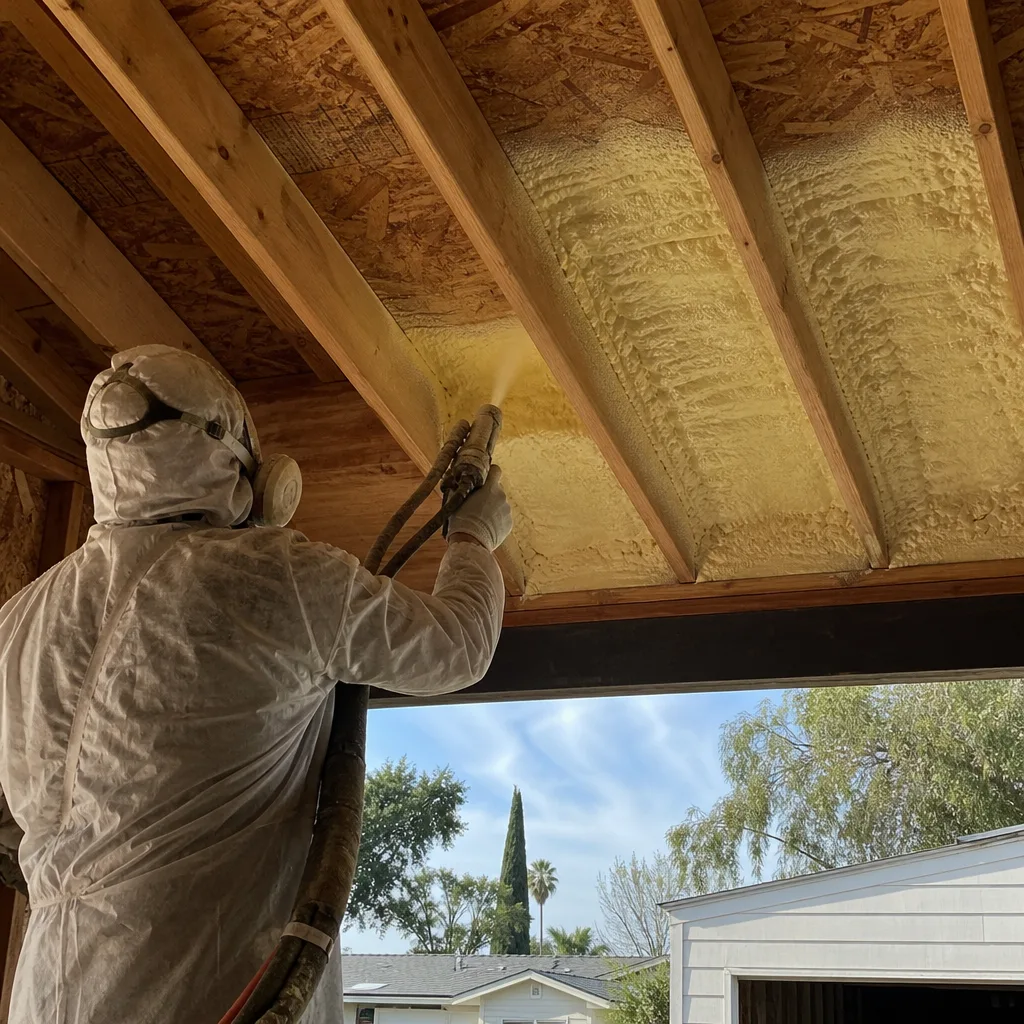
For sealed plaster walls and hard-to-reach cavities in historic San Marino homes, spray foam is often the only material that both insulates and air-seals in one pass. We install open-cell Icynene where breathability is preferred, and closed-cell Demilec where moisture or structural rigidity is a concern. In 1920s lath-and-plaster walls with no cavity access from the attic, injection foam can fill the bay without opening the wall. That’s the difference between preserving plaster and replacing it. See Spray Foam Insulation in San Marino for full details.
What happens when you call
- 1
A real person answersNo phone trees — you reach a local pro.
- 2
You get an upfront price rangeHonest numbers before anyone is dispatched.
- 3
A background-checked tech heads outLicensed & insured, dispatched right away.
- 4
You approve before work beginsNothing starts until you say go.
Blown In Insulation in San Marino
Blown in insulation in San Marino is the most practical retrofit for houses built between 1910 and 1950 that still have open wall cavities and under-insulated attics. These homes were framed when energy was cheap and insulation was an afterthought, so the cavities are often empty, and the attic floor may hold three inches of rock wool if anything at all. Blown-in cellulose or fiberglass reaches the spaces batts cannot, and because it’s installed through small drilled holes, the original plaster, trim, and wall finishes survive untouched. We’ve been doing this work in San Marino long enough to know which walls in a 1930s Spanish Colonial can take drilling and which need a different path. For details on materials and the technical approach, see Blown In Insulation.
Cellulose Insulation
Signs you need it
Rooms that swing ten degrees between morning and afternoon, especially on the west side of a San Marino home, usually point to empty wall cavities that cellulose can fill.
What it costs in San Marino
Cellulose wall retrofits in San Marino typically run $1.75 – $3.50 per square foot of wall area installed, depending on cavity access and plaster density.
How we do it
We drill small access holes from the interior or exterior, blow GreenFiber cellulose to the correct density, then patch and touch up so the original surface reads clean.
Blown In Attic Insulation
Signs you need it
If your second floor is ten degrees hotter than the first on a 100-degree San Marino afternoon, your attic insulation has likely settled or never reached the right depth.
What it costs in San Marino
Blown-in attic insulation in San Marino generally falls between $1,500 and $3,000 for a typical 1,500 – 2,500 square foot attic, including air sealing.
How we do it
We air-seal penetrations first, then blow cellulose or fiberglass to the R-value this climate zone requires, keeping soffit vents clear and the hatch sealed.
What Blown In Insulation Costs in San Marino
| Item | Typical range in San Marino |
|---|---|
| Cellulose wall retrofit (per sq ft) | $1.75 – $3.50 installed |
| Blown-in attic insulation (whole attic) | $1,500 – $3,000 |
| Loose fill attic top-up (over existing) | $0.90 – $2.10 per sq ft |
Is blown in insulation worth it in an old San Marino house?
Almost always. The empty cavities in pre-1950 San Marino walls are the single largest energy leak in the house, and blown-in fill pays back faster in this hot-climate zone than almost any other upgrade.
Does blown in insulation damage plaster walls?
Not when it’s done by a crew that works in old houses every week. We drill small holes, use the right density, and patch to match. Call (833) 390-7079 for a walkthrough.
Brands We Service in San Marino
We carry Icynene and Demilec spray foam systems, GreenFiber cellulose, and Owens Corning fiberglass and mineral wool products on our trucks serving San Marino. That means the material recommendation comes from what your house needs, not what we happen to have. See our brands for the full list.
Pricing for Insulation Company in San Marino, CA
| Service | Typical range in San Marino |
|---|---|
| Blown-in attic insulation (whole attic) | $1,500 – $3,000 |
| Blown-in wall insulation (per sq ft) | $1.75 – $3.50 |
| Loose fill attic top-up (per sq ft) | $0.90 – $2.10 |
| Fiberglass batt insulation (attic, per sq ft) | $0.65 – $1.50 |
| Mineral wool batt insulation (attic, per sq ft) | $1.20 – $2.80 |
| Closed-cell spray foam (per board foot) | $0.95 – $2.25 |
| Open-cell spray foam (per board foot) | $0.45 – $0.90 |
| Spray foam attic (1,000 sq ft) | $3,000 – $7,500 |
| Spray foam crawl space (1,000 sq ft) | $2,500 – $6,500 |
| Wall insulation removal | $1.50 – $3.00 per sq ft |
| Attic insulation removal | $1.25 – $2.75 per sq ft |
San Marino prices run toward the higher end of these ranges when we’re working around original plaster, clay tile, or architectural details that need extra care. We quote a fixed number before any work starts, and that number is what you pay.
Neighborhoods We Serve in San Marino
We work across the entire city, including the streets around Lacy Park, the Huntington Library area, and the hill sections near the Langham Huntington. Our crews know which blocks have the oldest framing and which homes need the most careful drilling, and our typical response time for a San Marino estimate is within 48 hours.
- Lacy Park area
- Huntington Library district
- Near the Langham Huntington
- North San Marino estates
- Oak Grove and Lorain Road corridor
Service Area – Cities Near San Marino
From our Las Flores base, we also serve homeowners in San Gabriel, CA, East San Gabriel, CA, Alhambra, CA, and East Pasadena, CA. If you’re just outside San Marino, call us and we’ll confirm coverage for your street.
Serving San Marino, CA — Our Local Coverage Area
We’re based in the San Marino area and know this community well. Use the map below to see our service coverage — if you’re nearby, we can almost certainly help.
FAQs About Insulation Company in San Marino
Most San Marino estimates are scheduled within 48 hours, and many jobs start within one to two weeks. Emergency attic or wall work can be arranged sooner; call (833) 390-7079 and tell us what’s happening.
Most insulation retrofits do not require a permit in San Marino, but some historic districts and architectural review areas may ask for documentation if exterior cladding is touched. We handle the paperwork questions before work begins.
Yes, and we plan every drilling and patching step around preserving it. That’s the core of how we work in San Marino’s older homes, where replacing plaster would cost far more than the insulation itself.
If your San Marino home has high energy bills, hot upstairs rooms, or walls that feel cold in January, call Airtight Insulation Co at (833) 390-7079. We’ll tell you exactly what’s going on in your cavities and what it costs to fix, with no pressure and a free estimate.
What happens when you call
- 1A real person answersNo phone trees — talk to a local insulation pro.
- 2You get an upfront price rangeHonest numbers before anyone is dispatched. No surprises.
- 3A background-checked tech heads outLicensed & insured, typically within 60-minute.
- 4You approve before work beginsNothing starts until you say go.
What San Marino Customers Say
"Spray foam in the rim joists in the basement. The cold floors above them are gone."
— Steve Ziegler"Attic was at maybe R-11 from the 1970s and blown in over the top would have just buried the problem. They removed the old material, air sealed the top plates and penetrations first, then blew in to R-49. The upstairs is a completely different house in August."
— Claudia Morales"He did a blower door test before and after and gave me the numbers. I like being able to see the difference rather than being told about it."
— Simone Grant