
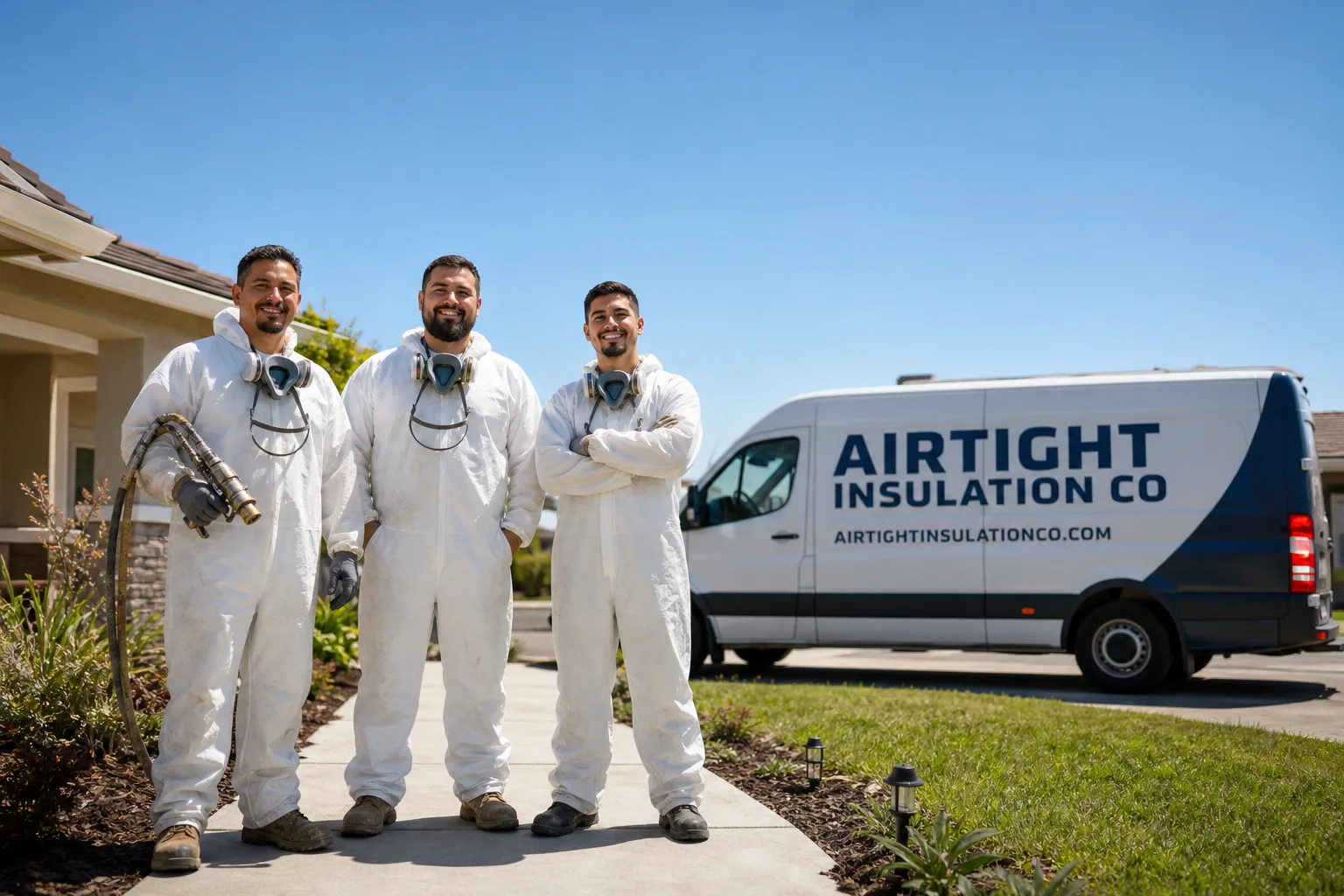
Fast, Reliable Attic Insulation Across San Marino
Attic insulation in San Marino works differently than in most Southern California cities. Homes here aren’t the uniform tract houses you find in Alhambra or East Pasadena. They’re estate properties built between the 1910s and 1950s, many with clay-tile roofs, original plaster walls, and cavities that were never insulated. Retrofitting them takes more than blowing in some fiberglass and calling it done. It takes a working knowledge of period construction methods, which materials will perform without trapping moisture against old framing, and how to access attics without walking on irreplaceable roof tiles. We’ve done this work across San Marino’s 91108 and 91118 zip codes for long enough to know where the surprises hide. Call (833) 390-7079 and we’ll walk you through what your home actually needs.
Why Airtight Insulation Co Is San Marino’s Preferred Attic Insulation Company
We got our start as a multi-solution insulation specialist because one-product contractors kept showing up to complicated San Marino jobs with the wrong material. That frustration is exactly what pushed us to stock eight manufacturer brands, from Owens Corning fiberglass to Icynene spray foam, so the recommendation always comes from the building, not our inventory. Ruben Acosta runs every estimate and walks every attic himself. Homeowners repeatedly tell us the same thing: we explained what was actually going on up there, then did what we said we’d do.
When we quote a job in San Marino, we quote the job as it will be performed there. That means accounting for lath-and-plaster repair, tile roof access limitations, and the time it takes to move material through smaller interior hatches on older homes. We don’t pad numbers. We give you a straight breakdown and let you decide.
Insulation Contractors in San Marino
Insulation contractors in San Marino have to think about access problems that never come up in newer housing. Most attics here are reached through a small interior hatch, and many roofs can’t be walked safely or at all. We plan every job around interior access because the alternative is climbing across clay tiles that haven’t been manufactured in decades. One cracked tile means a patch that will never match.
Retrofit Planning That Protects Original Materials
Before we touch an attic, we document what’s up there. Old knob-and-tube wiring, skip sheathing, roof deck gaps, and original plaster ceilings all change the plan. If knob-and-tube is present, insulation cannot go in against it without creating a fire risk. We’ll flag it, explain the sequence, and coordinate with an electrician if rewiring is needed first.
Interior Access, Not Roof Walks
On homes near the Huntington or along Orlando Road, we almost always stage material from inside. Blown-in cellulose and injection foam go through small access points and hoses, which means we’re not hauling bales over your roofline. It takes a little more setup time, but it protects the tile, the gutters, and the original fascia boards.
Typical San Marino attic insulation projects run $2.80 to $5.50 per square foot depending on material and depth. Wall cavity injection foam runs $4.00 to $7.50 per square foot. Attic ventilation upgrades add $350 to $900 depending on vent type and count.
Attic Ventilation in San Marino
Attic ventilation in San Marino is not optional given how hot the inland summers get. At the base of the San Gabriel Mountains, daytime attic temperatures in July and August regularly exceed 130°F. Without proper airflow, that heat radiates into living spaces all night. With correct intake and exhaust venting, attic temps drop enough to extend the life of the insulation itself and reduce cooling load substantially.
Balanced Intake and Exhaust for Older Roof Lines
San Marino’s Spanish Colonial and Tudor homes often have complex rooflines with multiple eaves and little ridge space. That makes standard ridge venting insufficient on its own. We use a combination of soffit intake vents, gable vents where the original design allows, and low-profile static exhaust vents that don’t alter the home’s silhouette.
Ventilation Before Insulation, Not After
You can’t just pile more insulation into an under-ventilated attic. Heat and moisture will shorten the life of whatever we install. We check existing ventilation first, then adjust the plan so the insulation depth doesn’t block soffit airflow. Baffle installation is standard on our San Marino jobs, especially where we’re bringing an attic up to R-38 or higher.
Trusted Brands We Service in San Marino
We install and service Owens Corning, Icynene, Demilec, and GreenFiber products across San Marino, and we hold material-specific training with each manufacturer. If your project needs open-cell spray foam for air sealing against original framing, we use Icynene or Demilec. If blown-in cellulose is the right call for a tight attic with irregular joist spacing, GreenFiber gives us a recycled-content option that performs. We keep common materials staged for San Marino jobs specifically, which means once your install date is set, we aren’t waiting on supply chain delays from a distributor across town.
Common Attic Insulation Problems We See in San Marino Homes
- Zero cavity insulation in original walls: Most 1920s San Marino estates were built before wall insulation was standard. The plaster sits directly against open stud bays. We use injection foam through small holes to fill those cavities without gutting the walls.
- Knob-and-tube wiring in uninsulated attics: Homes built before about 1935 often still have active or abandoned knob-and-tube circuits. Blowing insulation over live knob-and-tube is a fire risk. We identify it before any material goes in.
- Clay-tile roofs that can’t be walked: The original tiles on San Marino roofs are often 70 to 100 years old. If a technician walks them, hairline cracks let water under the tile and into the deck. Our crews access from inside only.
- Newspaper and rock wool from prior decades: Many older attics have a thin layer of mineral wool or literally old newspapers as their only insulation. It’s underperforming by a factor of five or more compared to modern R-38 standards. Removal and replacement is straightforward once access is sorted.
Pricing for Attic Insulation in San Marino, CA
We Also Serve Cities Near San Marino
Our crews work throughout San Marino and the surrounding communities. If you’re in San Gabriel, East San Gabriel, Alhambra, or East Pasadena, we offer the same Attic Insulation services with the same manufacturer lineup. Each area gets the same standard: material selected based on the home, not on what’s convenient. For more on our local presence, see Attic Insulation in San Marino.
Serving San Marino, CA — Our Local Coverage Area
We’re based in the San Marino area and know this community well. Use the map below to see our service coverage — if you’re nearby, we can almost certainly help.
FAQs About Attic Insulation in San Marino
Can you insulate the walls of a 1920s San Marino home without damaging the original plaster?
Yes. We use injection foam through small drilled holes, typically 1/2 to 3/4 inch, which are then patched to match. The technique fills open stud bays behind lath-and-plaster without removing any wall surface. It’s the standard retrofit approach we’ve used on Spanish Colonial Revival and Tudor homes throughout San Marino, including several near Lacy Park and along St. Albans Road.
How do you handle attic insulation when the roof has original clay tiles?
We never walk the roof. All material, hoses, and tools enter through an interior attic hatch or crawl access. Blown-in cellulose and injection foam are ideal for this because the equipment stays at ground level or inside the home, and the hose does the work. This protects tiles that can no longer be replaced with matching material.
What insulation R-value is recommended for San Marino’s hot summers and cool winters?
For attics in San Marino, we recommend R-38 for blown-in cellulose or fiberglass, and R-30 minimum for existing attics where depth is limited by roof geometry. Between the 95 to 105°F inland heat and the cold winter nights at the San Gabriel base, the temperature swing inside an unconditioned attic is extreme. R-38 provides enough thermal break to meaningfully reduce heat transfer in both directions. Call (833) 390-7079 for a precise recommendation based on your attic’s depth and framing.
Do you need to update old knob-and-tube wiring before insulating?
Yes, if the wiring is still live. Insulation cannot touch active knob-and-tube conductors. The heat the wire produces needs open air around it, and burying it in cellulose or fiberglass creates a fire hazard. If we find knob-and-tube during an attic inspection, we’ll pause the insulation work and refer you to a licensed electrician for rewiring. If the wiring has been abandoned and is no longer connected to the panel, it can stay in place and we insulate normally.
How does attic ventilation work with a historic San Marino home?
We match ventilation to what the roofline will allow. On homes where ridge venting would alter the original ridge detail, we use discreet gable vents and soffit intakes that sit mostly out of view. The goal is balanced airflow: intake low, exhaust high. Without it, attic heat and moisture build up and undermine the insulation. We recently insulated a 1928 Spanish Colonial Revival near Lacy Park where the original plaster walls had zero cavity insulation and the attic had only a thin layer of old newspapers. Our crew used injection foam through small, patched holes in the plaster to fill the wall cavities without damaging the custom woodwork, then blew in Owens Corning cellulose to bring the attic to R-38. The homeowners immediately noticed fewer 100°F afternoon heat spikes and quieter rooms.
Get a Free Attic Insulation Estimate in San Marino
If your energy bills climb every summer and your upstairs rooms never cool down, the problem is usually above you. We’ll inspect your attic, check for knob-and-tube, assess ventilation, and give you a straight answer about what’s needed and what isn’t. Call (833) 390-7079 to schedule a free estimate. Ruben will walk the job himself and you’ll get a fixed quote, not a range with fine print.
Written by Ruben Acosta, Owner at Airtight Insulation Co, serving San Marino since day one.