Fast, Reliable Attic Insulation Across Studio City
Attic insulation in Studio City isn’t a one-size job. The 91604 ZIP alone stretches from flat post-war tracts up into the canyon folds off Laurel Canyon, and those two housing worlds have very different thermal needs. We’re Airtight Insulation Co, and we’ve crawled through enough Studio City attics to know what actually works here: air sealing first, then the right material for the slope, the sun exposure, and the existing framing. Need someone out this week? Call (833) 390-7079 and we’ll schedule an on-site audit. Free estimate, no pressure.
Why Airtight Insulation Co Is Studio City’s Preferred Attic Insulation Company
We stock and install eight manufacturer brands, which matters more in Studio City than in most places because the material honestly changes based on whether your home sits on a flat 1950s lot or a steep canyon slope. Rockwool handles the moisture you get near shaded canyon walls. GreenFiber cellulose fills irregular cavities in older ranch attics without cutting new access. Icynene and Demilec spray foam air-seal roof decks that bake under the valley sun. We let the job pick the product.
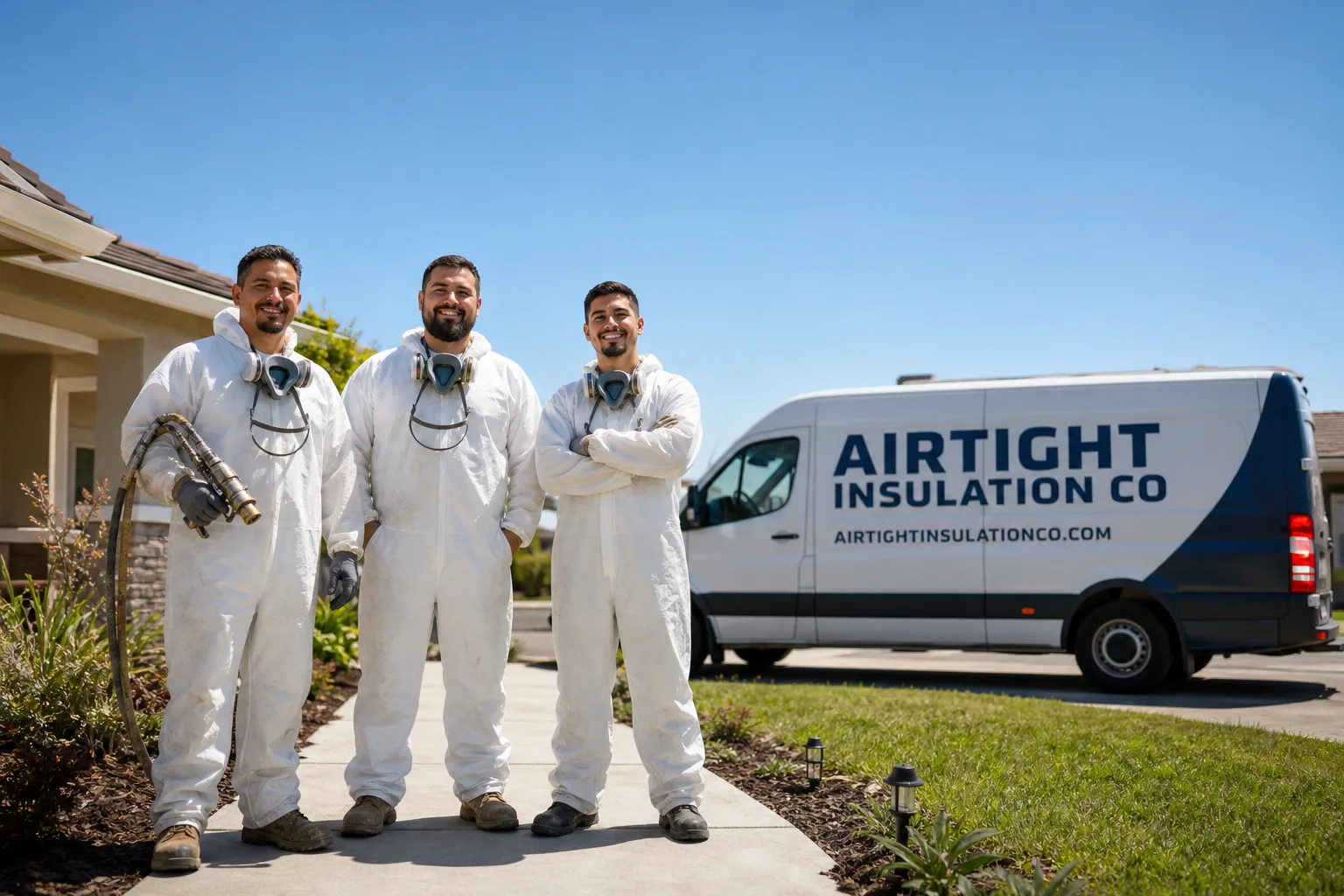
Ruben Acosta leads our crew, and he’s the one who walks every Studio City attic before any quote goes out. That’s not a sales ritual; it’s how you catch compressed R-8 batts under a re-roof ridge, or blown-in insulation that slid downhill on a sloped ceiling. Homeowners in Studio City call us because the last contractor guessed. We don’t.
We also respond fast. Most Studio City audits happen within 48 hours of the first call. Canyon homes and flat-lot ranches both get the same level of detail, because the failure modes are different and we need eyes in the attic to see which one you have. Call (833) 390-7079 and we’ll get you on the schedule.
Attic Ventilation in Studio City
Attic Ventilation in Studio City has to handle a specific problem: attic temperatures that spike well past 130°F in July and August, cooking whatever insulation is up there and pushing heat down into living spaces. A proper ventilation setup pairs intake at the eaves with exhaust at or near the ridge, sized to the attic’s square footage and roof pitch. On a 1950s ranch with a standard gable roof, that’s often soffit vents plus a ridge vent. On a hillside home with a low-slope or shed roof, the math changes and sometimes so does the hardware.
What “Sizing a Ventilation System” Actually Means Here
Ventilation is calculated by net free vent area, not by eyeballing it. For a 1,500-square-foot attic in Studio City, you’re typically looking at 6 to 10 square feet of combined intake and exhaust, split roughly 50/50. Undersized exhaust is the most common failure we find in mid-century ranches: someone added a single box vent at one end and called it done. That leaves dead air over the bedrooms and turns your attic into an oven that works against your insulation.
How We Work Around Older Framing
Most Studio City homes built in the 1940s and 1950s were framed before ridge vents were standard. Adding a ridge vent often means cutting back the roof sheathing along the peak, which is straightforward on a gable roof but gets finicky on the clipped gable and shed roofs you find in the hills. In those cases we spec alternative exhaust like dormer vents or powered fans where the roofline allows. The job isn’t done until air moves through the full attic, not just the accessible section.
Radiant Barrier in Studio City
Radiant Barrier in Studio City is one of the few upgrades that makes an immediate, measurable difference in a valley summer. It’s a reflective layer installed under the roof deck that reflects radiant heat away from the attic floor, where your insulation lies. In flat-lot ranches with standard rafter spacing, installation is clean. In hillside homes with low-slope roofs, exposed beams, or skylights cutting through the deck, we trim and fasten around every obstruction so the barrier stays continuous. A perforated radiant barrier here runs roughly $1,100 – $1,800 for a typical 1,400-square-foot attic, depending on roof geometry and access.
When Radiant Barrier Is the Right Call
If your attic insulation is already at or near R-38 and your upstairs rooms still run 80°F-plus during a heat wave, the problem is usually radiant heat, not conduction. A radiant barrier doesn’t replace insulation; it cuts the heat load on top of it. We’ve opened Studio City attics where the existing barrier had delaminated and was hanging in sheets, doing nothing. That’s the point where adding new barrier over the old produces a step-change in comfort.
Slope-Facing Installation Notes
On a canyon home, the south- and west-facing roof slopes take the direct sun. That’s where radiant barrier does the most work. We inspect those slope-facing cavities first, because that’s also where old barrier fails fastest: heat cycling loosens the staples, attic moisture dulls the reflectivity, and the foil separates from the substrate. A south-slope reinstall on a 1,200-square-foot attic in the hills above Ventura Blvd typically runs $900 – $1,500 depending on pitch and how much of the old material needs removal.
Trusted Brands We Service in Studio City
For Studio City attics, we lean on a handful of brands more than others. GreenFiber blown-in cellulose fills the irregular cavities in mid-century ranches and stays put better than loose fiberglass in sloped sections. Owens Corning batts and rolls give us dependable, readily available R-30 and R-38 fiberglass for standard joist bays. When the roof deck needs air sealing as much as thermal resistance, Icynene and Demilec spray foam do both in one pass. Our trucks carry enough common material to handle most Studio City jobs without a supply-run to the valley, which keeps the work moving.
Common Attic Insulation Problems We See in Studio City Homes
- Compressed fiberglass in 1950s ranches: Original batts settle and flatten to a fraction of their labeled R-value. We measured R-8 in an attic that was spec’d for R-19 simply because decades of foot traffic from HVAC techs and cable installers had packed it down.
- Downhill settlement in canyon homes: Blown-in insulation on sloped ceilings drifts toward the low side, leaving the uphill cavities under-insulated. The symptom is almost always a hot spot on the upper floor that no amount of AC run-time fixes.
- Delaminated radiant barriers: Older foil barriers peel from the roof deck after years of attic heat cycling. Homeowners see shiny material up there and assume it’s working; a closer look shows gaps where the foil has split at the staples.
- Air leaks around recessed lights and attic hatches: This is the Studio City classic. Mid-century homes were built leaky by design, but add decades of remodels and you get a stack effect that pulls conditioned air into the attic. Air sealing fixes what insulation cannot.
Pricing for Attic Insulation in Studio City, CA
A full air seal plus blown-in cellulose to R-38 in a 1,400-square-foot Studio City ranch typically runs $2,800 – $4,200, depending on existing insulation removal and how many recessed lights need sealing. For a canyon home with low-slope ceilings, add 15 – 25% for access and slope work. Radiant barrier alone: $900 – $1,800. Attic ventilation upgrades: $650 – $1,400 per system. These are Studio City market ranges, not national averages; the hills add ladder time and the old framing adds labor. Call (833) 390-7079 for an exact number. Our estimates are free and they don’t expire after a week.
We Also Serve Cities Near Studio City
Our service area reaches north into North Hollywood, across the hill to Universal City, and west through Sherman Oaks and West Hollywood. This matters for Studio City homeowners, because the Attic Insulation work we do here draws on the same trade knowledge across the valley’s varied housing stock. If you’re in Studio City proper or a neighboring pocket, call and we’ll route the nearest available crew.
Serving Studio City, CA — Our Local Coverage Area
We’re based in the Studio City area and know this community well. Use the map below to see our service coverage — if you’re nearby, we can almost certainly help.
FAQs About Attic Insulation in Studio City
Your neighbor’s attic slab is likely insulated evenly across a flat ceiling, so the R-value holds. Your hillside home almost certainly has sloped ceilings with blown-in insulation that has settled toward the low side, leaving the uphill slope under-insulated and letting heat radiate down through the drywall. An on-site audit that measures insulation depth along the slope will confirm it. Call (833) 390-7079 and we’ll bring the depth gauge.
Yes, low-slope attics are entirely workable as long as there’s enough crawl space to reach the underside of the deck. We trim the barrier around beams, skylights, and vent penetrations, and on very shallow attics we work off planks to avoid compressing the insulation below. Ventilation must be adequate first, otherwise the barrier can trap moisture. Estimates are free; call for one.
If the original batts are compressed, rodent-soiled, or water-stained, remove them. Adding new insulation on top of degraded material doesn’t recover the lost R-value and can seal in contaminants. Clean, uncompressed batts, on the other hand, can stay in place while we blow GreenFiber cellulose over them to reach R-38. We make that call after looking at the attic, not before.
For most Studio City homes, air sealing plus blown-in cellulose to R-38 with a radiant barrier on the sun-facing slopes is the combination that actually moves the needle. Cellulose packs better around irregular framing, and the radiant barrier handles the radiant load that fiberglass alone can’t stop. Spray foam earns its cost when the attic is also the air handler’s location or the roof deck leaks badly.
Yes, we service the full 91604 and 91614 area, from the flat tracts below Ventura Blvd up through the canyon homes off Laurel Canyon. The job details change: canyon homes get more slope work and access planning, while ranches usually involve more air sealing around old ceiling penetrations. Both get a real audit before any quote. Call (833) 390-7079 and we’ll be direct about what you need.
Call (833) 390-7079 to schedule a free attic audit in Studio City. Ruben Acosta will walk the attic personally, show you what’s actually up there, and quote a fix that fits your home’s framing and slope, not a generic R-value.
Written by Ruben Acosta, Owner at Airtight Insulation Co, serving Studio City and the surrounding San Fernando Valley.