
Fast, Reliable Attic Insulation Across Palos Verdes Estates
Attic insulation in Palos Verdes Estates isn’t a one-size-fits-all job. Most homes here were built between the 1950s and 1970s with open-beam ceilings and flat or low-slope roofs, which means the standard “blow in more fiberglass” approach often makes things worse before they get better. We’re Airtight Insulation Co, and we’ve spent years working through the specific moisture, venting, and salt-air problems that come with bluff-side construction. If your attic insulation is sagging, damp, or simply not doing its job, call us at (833) 390-7079. We’ll diagnose it properly before we recommend anything.
Why Airtight Insulation Co Is Palos Verdes Estates’s Preferred Attic Insulation Company
Palos Verdes Estates homeowners call us because we understand what their houses actually are: mid-century wood-frame construction with roof decks that were never designed for modern insulation standards. That’s not a generic sales pitch. It’s the reality of working in 90277, where unvented attics, open-beam ceilings, and marine-layer humidity combine to create insulation failures that inland contractors rarely see.
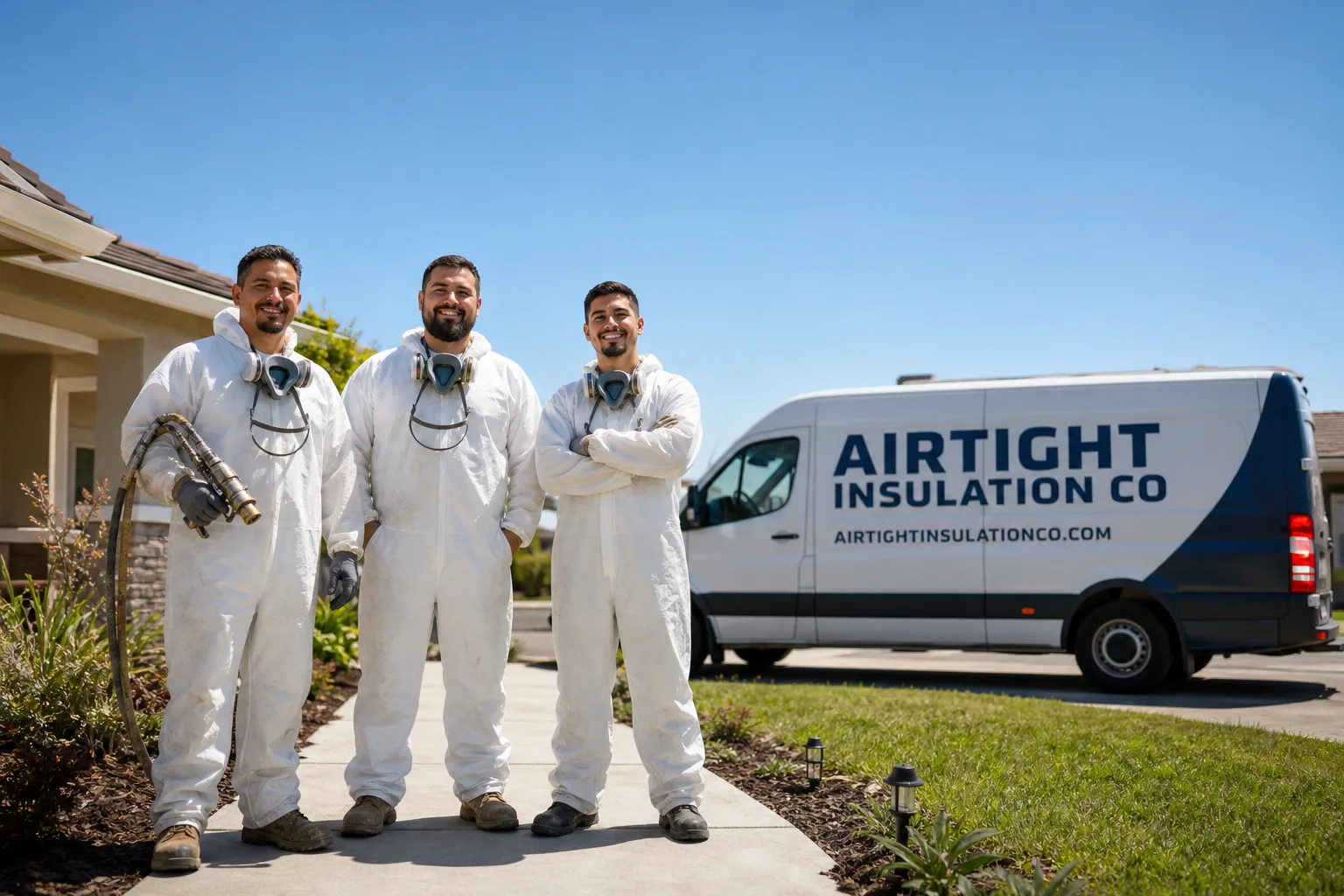
Led by Ruben Acosta, our crew has worked on homes from Lunada Bay to Malaga Cove. What we consistently hear from customers is that previous contractors quoted a simple batt replacement or blown-in top-off without addressing the venting gaps that caused the original failure. We don’t do that. We let the job pick the product, and sometimes the job says the venting needs to be fixed first.
The Airtight name sets a bar for us: if air is still moving through the assembly, the job isn’t done. That’s the standard Ruben Acosta holds every install to, whether it’s closed-cell foam on a bluff-side roof deck or mineral wool in a flat-roof remodel. Palos Verdes Estates residents reach us quickly, get straight answers, and don’t get upsold on products their home doesn’t need.
Attic Ventilation in Palos Verdes Estates
Attic Ventilation is often the actual problem in Palos Verdes Estates homes, even when the symptom looks like failed insulation. Most mid-century houses here have flat or low-slope roofs with little to no venting, and the marine layer keeps the underside of the roof deck damp for long stretches of the year. Without proper airflow, condensation forms, insulation mats down, and the deck sheathing eventually rots. Insulation alone can’t fix that; the assembly needs a way to dry.
Sealed Assemblies on Low-Slope Roofs
On a low-slope Palos Verdes Estates roof, we typically have to create vent space before adding insulation. That means baffles, sealed soffit and ridge openings where the framing allows, and sometimes reconfiguring the existing hatches or can-light penetrations. It’s more involved than a standard vented-attic job in Torrance or Redondo Beach, and it’s the single most common reason a Palos Verdes Estates retrofit costs more than a comparable job a few miles inland. Ventilation work like this usually runs $1,200 to $3,800 depending on roof configuration and access.
Marine-Layer Condensation Control
The fog that rolls in off the Pacific doesn’t just make the air cool; it pushes humid air into any unsealed gap. Attics over open-beam ceilings are especially vulnerable because there’s no continuous top plate to seal against. We’ve found that addressing ventilation and air-sealing together is the only way to stop the cycle of condensation, mold, and re-insulation every five years.
Radiant Barrier in Palos Verdes Estates
Radiant Barrier in Palos Verdes Estates makes sense when the goal is to cut heat gain through the roof deck, but it has to be installed correctly on these mid-century roof assemblies. A radiant barrier reflects radiant heat rather than slowing conductive heat loss, which is why it works well in attics with strong sun exposure. But on the Peninsula, the bigger performance win is usually air-sealing first; a radiant barrier stapled over leaky can-light gaps and top-plate openings won’t deliver what homeowners expect.
Best Applications on Palos Verdes Estates Roofs
Properties with large roof decks that take direct afternoon sun, especially in the higher-elevation parts of the city away from the immediate marine layer, benefit most. Closed-cell foam against the roof deck already includes an air barrier, but for homeowners who want to keep a vented assembly, a radiant barrier under the decking can cut afternoon heat gain meaningfully. We recommend it selectively, not by default.
Installation Cost and Payback
A radiant barrier install in Palos Verdes Estates typically runs $1,800 to $4,200 depending on attic size and roof pitch. The payback depends on how much direct sun the roof takes and how well the attic floor is already insulated. On a well-sealed attic with good ventilation, the comfort difference in upstairs rooms is often noticeable within a single summer. Call (833) 390-7079 and we’ll tell you honestly whether a radiant barrier is the right spend for your home, or whether that money belongs in air-sealing and insulation instead.
Trusted Brands We Service in Palos Verdes Estates
We carry and install materials from manufacturers that hold up to coastal conditions, including Owens Corning, Johns Manville, Knauf, and GreenFiber. The reason we stock multiple brands isn’t to give you a catalog; it’s because a 1960s open-beam bluff house needs something different from a 1990s tract home with a standard vented attic. Mineral wool from Rockwool handles moisture without losing its shape, which matters in the marine layer. Blown-in cellulose from GreenFiber is a solid choice where the attic is deep and dry. Closed-cell foam from Demilec or Icynene does the heavy lifting when the roof deck itself becomes the thermal boundary. If you’re in Palos Verdes Estates and need a specific product matched to your home’s assembly, we have it on hand, not ordered in from two weeks out.
Common Attic Insulation Problems We See in Palos Verdes Estates Homes
- Original 1960s fiberglass that’s matted and sagging. Salt-laden marine air works its way into unsealed attics and breaks down the binder in old batts, leaving them listing off the joists and holding a fraction of their original R-value. We remove the old material, address the moisture path, and rebuild the assembly properly.
- Condensation and mold on unvented flat and low-slope roof decks. When no vent space or vapor barrier was ever built, humid bluff air collects against the cool underside of the roof deck, staining the wood and eventually compromising its strength. The fix starts with creating vent space and air-sealing the ceiling plane, not just laying new insulation over the problem.
- Insulation installed without air-sealing can-light and top-plate gaps. A radiant barrier or batt job that skips air-sealing lets humid bluff air bypass everything, and the insulation becomes a filter, not a barrier. This is the most common defect we find when a previous contractor did a quick top-off in 90277.
- Sagging crawl space insulation on ocean-facing bluffs. Homes on the bluff side often have crawl spaces that pull in damp, salty air, causing insulation under the floor to lose loft and effectiveness. Properly sealed crawl spaces with the right insulation make a noticeable difference in first-floor comfort.
Pricing for Attic Insulation in Palos Verdes Estates, CA
Attic insulation in Palos Verdes Estates reflects the complexity of the housing stock, not just square footage. A straightforward blown-in top-off in a vented attic runs about $1,500 to $2,800. Batt removal and replacement with air-sealing on a standard mid-century home starts around $3,200 and can go to $7,500 depending on attic accessibility and the amount of failed material. Full closed-cell spray foam against a low-slope roof deck, including venting prep, falls in the $8,000 to $16,000 range. The difference between the low and high ends is almost always the amount of moisture remediation, vent-space creation, and air-sealing required before insulation goes in. We give free, itemized estimates so you know exactly what’s driving the number. Call (833) 390-7079 to schedule one.
We Also Serve Cities Near Palos Verdes Estates
While this page focuses on Attic Insulation in Palos Verdes Estates, our crews routinely work in Redondo Beach, Manhattan Beach, Rolling Hills Estates, and Hermosa Beach. Each of those cities has its own housing quirks, and we treat them accordingly. See our main Attic Insulation page for an overview of all the services we provide across the South Bay.
Serving Palos Verdes Estates, CA — Our Local Coverage Area
We’re based in the Palos Verdes Estates area and know this community well. Use the map below to see our service coverage — if you’re nearby, we can almost certainly help.
FAQs About Attic Insulation in Palos Verdes Estates
Yes, but the approach is different from a standard vented attic. With open-beam ceilings and a low-slope roof, there’s usually no soffit-ridge airflow, so the roof deck itself becomes the thermal boundary. That means closed-cell foam applied directly to the underside of the deck, or a carefully built vent channel with baffles before insulation goes in. It’s more expensive than a blown-in top-off, but it’s the only way to do it without trapping moisture in the assembly. Call (833) 390-7079 and we’ll evaluate your specific roof and beam configuration.
The marine layer and persistent onshore fog keep the air around your home humid nearly year-round, and salt-laden moisture accelerates the breakdown of fiberglass binder. If your attic isn’t fully air-sealed, that humid air moves through the ceiling plane and condenses against the cool roof deck, soaking the insulation from above and below. In most Palos Verdes Estates homes, the root cause is unsealed penetrations and missing vent space, not the age of the insulation on its own.
Before. In a Palos Verdes Estates house with a flat or low-slope roof, you need to establish a vent path and an air barrier first, or the new insulation will fail the same way the old insulation did. This is the single most important sequencing decision on Peninsula homes. Skipping it saves a few dollars up front and guarantees a repeat job in a few years.
It depends on sun exposure and what’s already in the attic. A radiant barrier helps control heat gain on roofs that take direct afternoon sun, especially where inland-facing slopes see more UV. But if the attic leaks air, a radiant barrier won’t fix the comfort problem. We’d rather show you where the air is moving first, then decide whether a radiant barrier is a smart add-on or a distraction.
It comes down to what’s failing and why. If the insulation is dry, intact, and the venting is functioning, a targeted top-off works. But if you’ve got damp batts, mold on the roof deck, or evidence of condensation on the beam bays, a full retrofit with air-sealing and proper venting is the only repair that lasts. We’ll walk the attic with you, show you what we’re seeing, and give you numbers for both paths. Estimates are free, and you’ll get a straight recommendation from Ruben Acosta’s team, not a push toward whichever path costs more.
Contact Airtight Insulation Co in Palos Verdes Estates
If your Palos Verdes Estates attic is damp, sagging, or just not keeping the foggy chill out, call us at (833) 390-7079. We’ll schedule a time to inspect your attic, explain exactly what’s happening, and give you a written estimate for the work that actually needs to be done. Whether you’re in Lunada Bay, Malaga Cove, or up near the golf course, we’ll get your attic sealed, vented, and insulated to a standard that holds up to the Peninsula’s humidity and salt air.
Written by Ruben Acosta, Owner at Airtight Insulation Co, serving Palos Verdes Estates and the South Bay.