
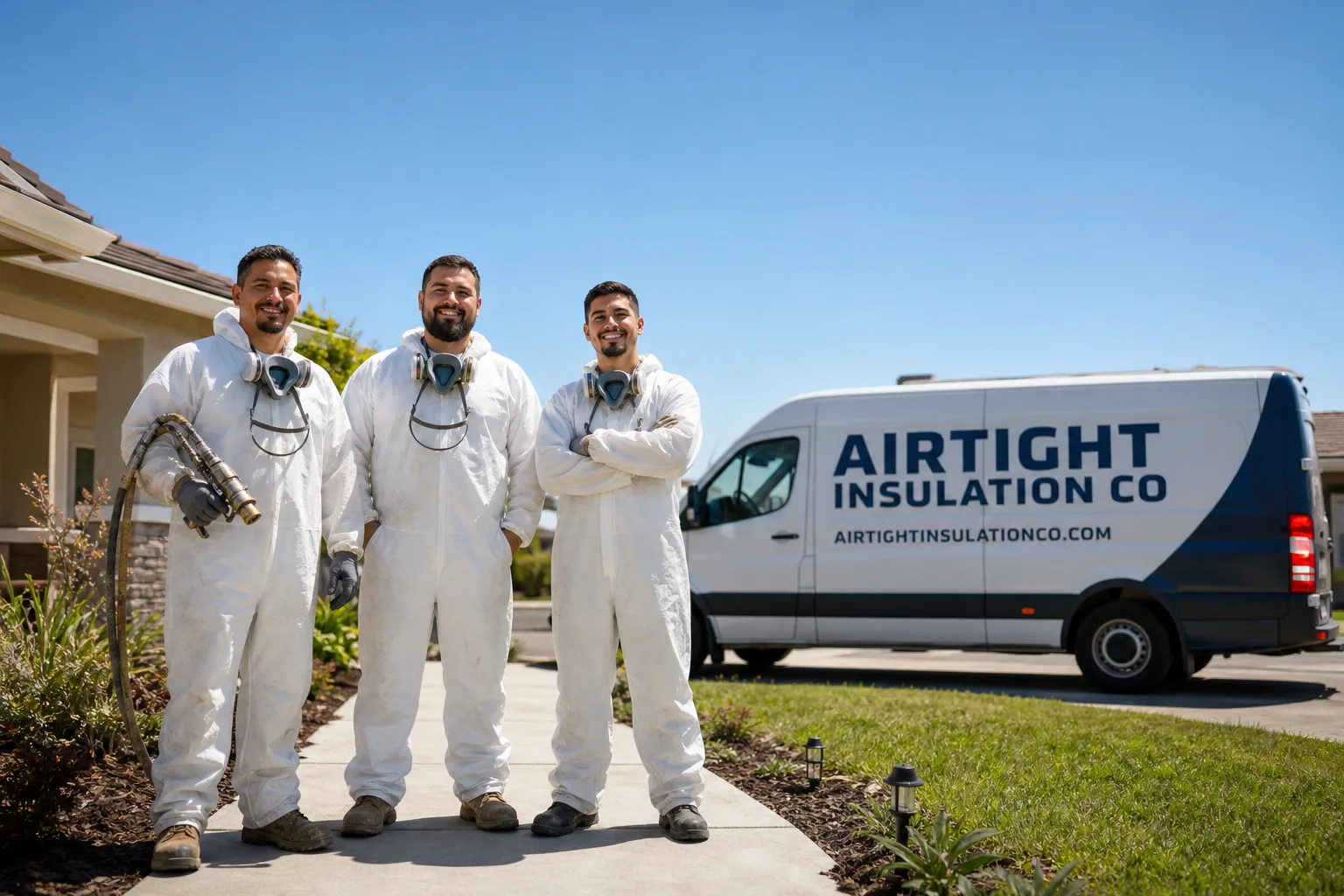
Fast, Reliable Attic Insulation Across Ladera Heights
Most Ladera Heights homes were built in the 1960s with bare rafters and zero attic insulation. That’s not a defect. That’s how the neighborhood was constructed. If your ranch or split-level on the hill fights cold, damp mornings and west-facing rooms that never warm up, the attic is usually the culprit. Airtight Insulation Co serves all of zip code 90056 with same-week scheduling. We know the Ladera Heights housing stock: shallow 1960s attics, low-pitch roofs, single-pane sliders, and top plates that were never air-sealed. You don’t need a one-size-fits-all blow-and-go. You need the right material for a 60-year-old hillside home. Call Ruben and our team at (833) 390-7079 for a free attic assessment. We’ll open the hatch, tell you what’s actually in there, and give you an exact number.
Why Airtight Insulation Co Is Ladera Heights’s Preferred Attic Insulation Company
We carry eight manufacturer brands: Owens Corning, Johns Manville, Knauf, Rockwool, CertainTeed, Icynene, Demilec, and GreenFiber. That matters for Ladera Heights because no two 1960s attics here are alike. Some have vaulted ceilings with tight cavities. Some have been partially renovated. Some still have the original shake under a re-roof. We let the job pick the product. If your attic needs dense-pack cellulose in a shallow bay, we use GreenFiber. If you need closed-cell foam on an unvented lid, we spray Demilec. If mineral wool’s fire rating and moisture resistance matter for your wiring or duct runs, we install Rockwool.
Ruben Acosta leads every project. He’s walked hundreds of attics in this specific neighborhood with a flashlight and a moisture meter. He’ll tell you plainly if the previous insulation job failed because the top plates were never sealed. That’s the kind of local diagnosis you won’t get from a contractor who shows up with one truck and one product.
We’re based in Las Flores, but Ladera Heights is a regular route for us. Response time to 90056 is typically same-week for assessment and install, because we keep GreenFiber, batt stock, and both open- and closed-cell foam rigs ready. We schedule around the marine layer, not against it. Morning assessments here mean opening the hatch while the air is still damp and seeing exactly how moisture moves through the envelope.
Attic Insulation Removal in Ladera Heights
Attic Insulation Removal is the step Ladera Heights homeowners often skip, and it’s the step that makes or breaks the retrofit on these 1960s hilltop ranchers. The original homes were built with nothing, but plenty were topped up or poorly insulated somewhere in the 1980s and 1990s. If we open the hatch and find thin, compacted fiberglass that’s been absorbing marine-layer moisture for 30 years, adding more on top just traps the damp. Removal is the right call. In Ladera Heights, a typical removal job runs $1.50 – $3.00 per square foot depending on depth, access, and whether we’re vacuuming or bagging by hand in a shallow, hard-to-crawl 1960s cavity. Most full removals in 90056 land between $1,800 and $4,200.
When Removal Is Necessary
If the existing insulation is wet, mold-stained, rodent-soiled, or compressed below half its original loft, removal beats covering it. Damp, matted fiberglass in a Ladera Heights attic isn’t performing. It’s holding cold air against your ceiling. We see it most often in west-facing rooms where the slider fogs every June morning and the ceiling directly below feels clammy to the touch.
Removal and Air-Sealing in One Trade
We don’t remove just to remove. We remove when it lets us get to the top plates. In these 1960s builds, wiring chases, plumbing penetrations, and the gap between drywall and framing were never sealed. That’s where the daily marine layer pushes damp coastal air straight into the attic cavity. Pulling old insulation gives us the access to foam-seal every penetration before we put anything back.
Insulation Contractors in Ladera Heights
Insulation Contractors get a bad name in this neighborhood for a reason. Ladera Heights is full of one-truck crews who blow fiberglass into a shallow 1960s attic in 90 minutes, charge $4,000, and leave the eaves and top plates untouched. A serious contractor here does it differently: we assess the actual cavity, measure the air leakage, and write a job plan around this specific house. Ladera Heights spans custom and semi-custom single-story ranches and split-levels on the hill. That means vaulted sections, dropped soffits, knee walls, and attic hatch locations that were never standard. You can’t invoice these homes by the square foot and call it done.
Before and After the Blow-In
The blow-in matters less than what happens before it. We check the baffles and soffit vents on the eaves, because if the low-pitch roof is venting into the insulation bay, the marine-layer air will wet the cellulose before the month is out. Then we air-seal. Then we blow. The sequence is the job.
What a Proper Quote Covers
Our written quotes for Ladera Heights jobs itemize those basement-to-attic air seal passes, the baffle work, the material and depth, and the final R-value verification. You’ll know the number before we start, and there’s no upcharge if we find an unsealed top plate mid-job. That’s part of every quote we write, not an add-on.
Trusted Brands We Service in Ladera Heights
We stock and install Icynene, Demilec, GreenFiber, Owens Corning, and four more manufacturers, which means the material recommendation always fits the job rather than the other way around. For Ladera Heights’s shallow 1960s attic cavities, GreenFiber cellulose at a level depth is often the smart call because it settles evenly into hard-to-reach eaves without the gaps you get from poorly cut batt. For homes on the hill with unvented roof decks and moisture concerns, Demilec closed-cell foam gives us air sealing and R-value in one pass. And for homeowners who want mineral wool’s fire resistance in an attic with older knob-and-tube remnants or furnace flues, we install Rockwool. The brand decision is made in your attic, not in our warehouse.
Common Attic Insulation Problems We See in Ladera Heights Homes
- Bare rafters in original 1960s ranches: No insulation at all. The home was built that way. It’s not a defect, just a product of the era. We find it every week off Ladera Crest Drive and Don Lorenzo Drive.
- Unsealed top plates and penetrations: The daily marine layer pushes damp coastal air straight into the attic through gaps around wiring, ducts, and the drywall-to-framing seam. Any insulation added without sealing first underperforms.
- Compressed, uneven insulation in low-pitch cavities: The 1960s roof pitches here are shallow. A quick blow-in leaves the eaves bare and compresses the field. Both cut the actual R-value below what the bag says.
- West-facing single-pane sliders sweating every morning: That June-morning fog on the glass isn’t a window problem. It’s a humidity problem driven by the marine layer meeting warm interior air. The attic is where that moisture cycle gets broken.
Pricing for Attic Insulation in Ladera Heights, CA
Here are real numbers from our recent Ladera Heights jobs. Blown-in GreenFiber cellulose in a standard 1,200 – 1,500 square foot 1960s ranch runs $2,200 – $3,800 after air-sealing. Batt installation with Owens Corning or CertainTeed products lands $1,800 – $3,200 depending on access and whether we’re working around vaulted sections. Attic Insulation Removal runs $1.50 – $3.00 per square foot, which on most 90056 homes is $1,800 – $4,200. Closed-cell Demilec spray foam is the top of the range at $5.50 – $8.00 per square foot of roof deck, but in a shallow unvented attic with the marine layer pushing in, it’s sometimes the only product that actually solves the problem. We give free estimates on all of it. Call (833) 390-7079 and Ruben will give you the exact number for your house.
We Also Serve Cities Near Ladera Heights
Our crews work Attic Insulation in Ladera Heights daily, and we run the same routes into View Park-Windsor Hills, Culver City, Lennox, and Westmont. The housing stock shifts from one hill to the next. View Park-Windsor Hills has the same 1960s split-levels and thin attic cavities we know from Ladera Heights, so the same Attic Insulation approach carries straight over. If you’re a few blocks outside 90056, call us anyway. We’re close.
Serving Ladera Heights, CA — Our Local Coverage Area
We’re based in the Ladera Heights area and know this community well. Use the map below to see our service coverage — if you’re nearby, we can almost certainly help.
FAQs About Attic Insulation in Ladera Heights
They were built that way. The neighborhood’s original ranch and split-level homes went up in the 1960s when energy was cheap and insulation requirements were minimal or nonexistent. Builders framed 2×4 walls, sheeted the roof, and moved on. So when we pop the hatch on a home off Slauson Avenue or La Brea Avenue, we regularly find bare rafters and nothing between the ceiling and the roof deck. The good news: retrofitting these 1960s cavavities is straightforward work when it’s done methodically. Call (833) 390-7079 and we’ll tell you exactly what’s in your attic today.
Yes, and it’s the single most important factor in this neighborhood. Ladera Heights sits on a hilltop just inland from the ocean, so the marine layer rolls in over the Baldwin Hills almost every morning. That cool, damp air gets pulled into the attic through unsealed top plates, electrical penetrations, and the seam where the ceiling drywall meets the framing. If insulation is added without air-sealing first, the damp air just flows around and through it. Airtight’s approach here is always: seal it, not just fill it. That’s where the measurable comfort gains come from.
Yes. The challenge is real: low-pitch roofs leave limited depth near the eaves, and a careless blow-in compresses whatever it covers and leaves the corners bare. We deal with this by using dense-pack techniques that let GreenFiber cellulose settle evenly into tight eaves without voids, or by installing batts where the cavity shape makes blown-in ineffective. No two Ladera Heights attics are identical. Some have vaulted sections, some have mechanical chases running right through the middle. We plan each one individually. Estimates are free.
Only if the existing insulation is wet, compressed, mold-stained, or rodent-soiled. In many Ladera Heights homes, the original 1960s build had nothing at all, so removal is moot. But if a previous owner blew fiberglass in the 1980s and it’s been absorbing marine-layer moisture for 30 years, covering it traps the damp against your ceiling and creates condensation problems. We’ll tell you straight after a 20-minute attic inspection. Some attics need removal. Some just need air-sealing and a top-up.
In Ladera Heights, air-sealing is the higher-value first step in most homes. The marine layer dumps damp air into the attic every morning through unsealed top plates and penetrations. Add insulation on top of those gaps and you’re insulating a leaky box. R-value only works when air movement stops. That said, many of these 1960s homes have neither sealing nor insulation, so we typically do both in the same visit. The sequence is seal, then insulate. We wrote our company name around this exact standard. Call (833) 390-7079 and Ruben will walk you through what your attic actually needs and what it costs.
Written by Ruben Acosta, Owner at Airtight Insulation Co, serving Ladera Heights and surrounding communities.