Knauf Attic Insulation in Las Flores: A Homeowner’s Guide
Knauf attic insulation is one of the most common requests we field from Las Flores homeowners, and the short answer is this: Knauf’s EcoBatt fiberglass batts are a strong, budget-sensible choice for standard vented attics with shallow joist bays, and Knauf’s blown-in fiberglass covers larger, irregular attic floors well. The material uses an ECOSE binder that contains no added formaldehyde, which matters if anyone in your house has asthma or chemical sensitivities. If you’d rather not sort through R-values and installation details on your own, call us at (833) 390-7079 and we’ll diagnose your attic over the phone.
Most product guides for insulation brands read like manufacturer brochures. This one won’t. Knauf is a solid product line, and it’s also not the right call for every attic in Las Flores. We’ll tell you where it excels, where it falls short, and what actually matters when you’re comparing bids.
Key Takeaways
- Knauf EcoBatt batts and Knauf blown-in fiberglass are two different products with different ideal applications in Las Flores attics.
- The ECOSE binder eliminates formaldehyde and gives Knauf a real air-quality advantage during and after installation.
- Knauf fiberglass delivers about R-3.1 to R-3.4 per inch, which matters when your joist depth is limited.
- Knauf is not the best fit for high-moisture attics, cathedral ceilings, or jobs where air sealing is the priority.
- California Title 24 compliance requires specific documentation from your installer, and Knauf products slot into that process cleanly when installed to spec.
What Knauf Actually Makes and Which Product Fits Your Las Flores Attic
Knauf Insulation manufactures two fiberglass product lines that show up in Las Flores attics: EcoBatt batts (also called Kraft-faced or unfaced batts, depending on the vapor-retarder needs) and blown-in loose-fill fiberglass. They’re both fiberglass, but they install differently and serve different attic configurations.
EcoBatt batts are pre-cut rectangles that friction-fit between joists and studs. In Las Flores tract homes from the 1970s through early 2000s, attic joists are often 2×6 or 2×8, which changes how much batt you can physically fit without compressing the product. Compressed fiberglass loses R-value per inch, so forcing an R-38 batt into a 2×6 cavity doesn’t give you R-38. We see this fairly often when homeowners attempt their own insulation upgrades and end up with performance far below what the package claims.
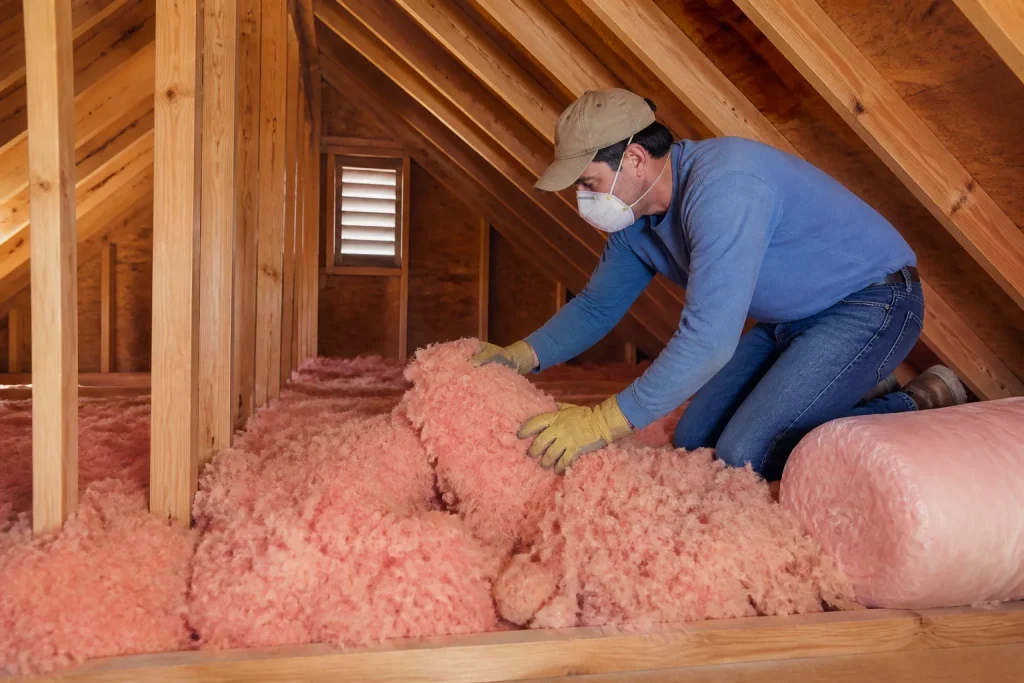
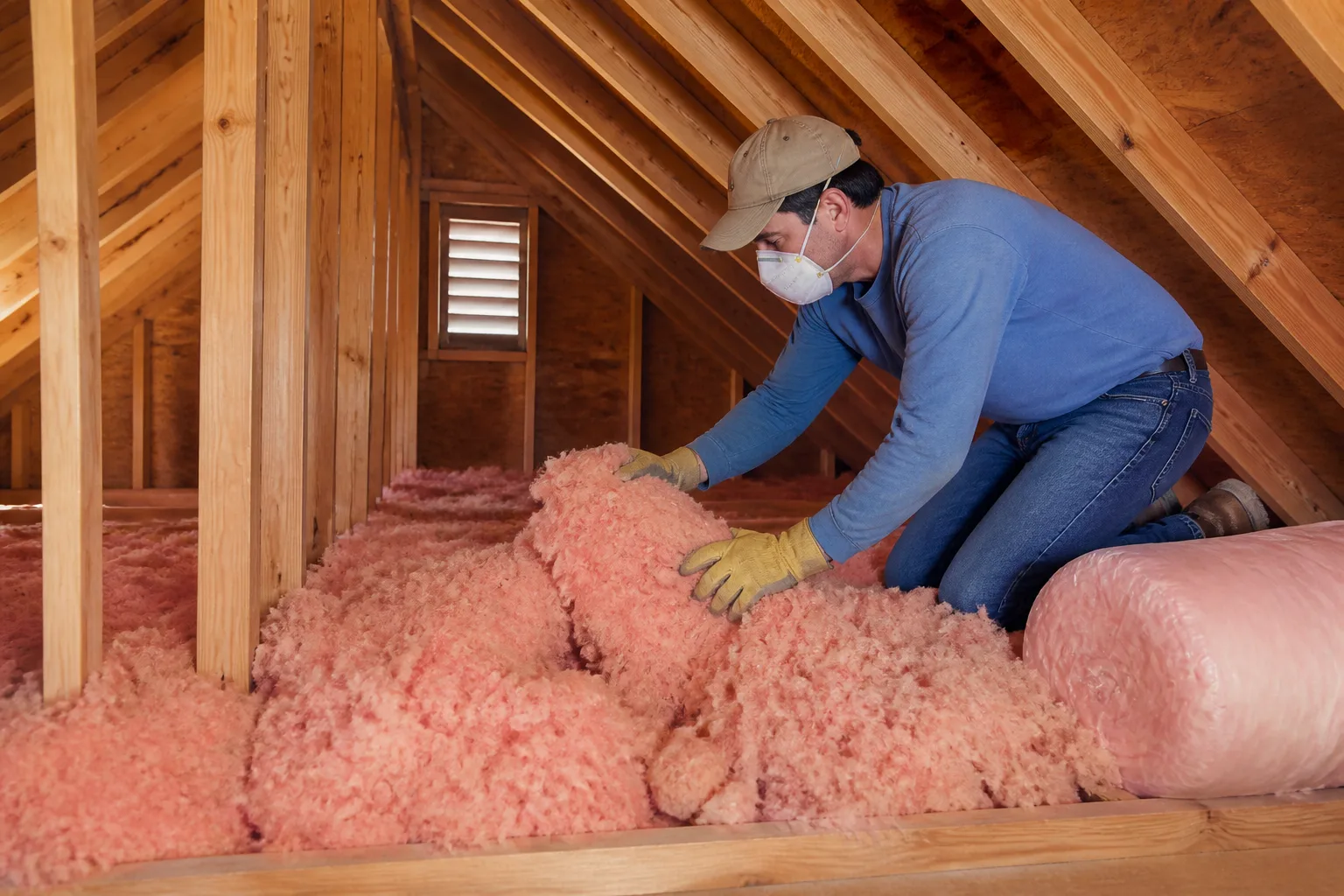
Knauf blown-in fiberglass is loose material installed with a blowing machine, which lets it fill irregular cavities, around cross-bracing, plumbing vents, recessed can lights (with proper clearance), and other obstructions common in Las Flores attics. For attics with uneven joist spacing or lots of penetrations, blown-in usually delivers more consistent coverage than batts.
We’ll say it plainly: if your attic floor is open and uniform, batts are faster and cheaper to install. If it’s a maze of ductwork and framing, blown-in is the better tool.
ECOSE Binder: What It Means for Your Indoor Air
Knauf’s ECOSE binder is the primary technical difference between Knauf fiberglass and many competing fiberglass products, and it’s worth understanding before you sign a bid. Traditional fiberglass insulation uses a phenol-formaldehyde binder to hold the glass fibers together. ECOSE replaces that binder with a plant-based formulation that contains no added formaldehyde. That means lower off-gassing during the first days after installation, and lower ongoing chemical emissions once the product is in place.
For Las Flores homeowners with asthma, allergies, or general chemical sensitivity, this is a legitimate decision factor. We’ve installed Knauf in households where a family member reacts to strong chemical odors, and the feedback during the first week after installation is consistently better than with conventional formaldehyde-bound batts.
The practical caveat: this benefit matters most for indoor installations or attics that share air with living space. In a sealed, vented attic with a proper air barrier at the ceiling plane, the attic air shouldn’t be mixing with your indoor air anyway. But many Las Flores homes have recessed lights, unsealed top plates, or pull-down attic stairs that create air exchange between the attic and living space. If that’s your house, the binder chemistry matters more.
Related: Airtight Insulation Co home covers how we approach whole-attic air sealing before any insulation goes in.
R-Value Per Inch: Knauf vs. Mineral Wool vs. Cellulose
When joist depth limits how much material you can install, R-value per inch becomes the deciding factor. Knauf fiberglass batts deliver roughly R-3.1 to R-3.4 per inch depending on the specific product and density. Rockwool mineral wool batts sit slightly higher, around R-4.0 to R-4.3 per inch. Blown-in cellulose lands around R-3.2 to R-3.8 per inch depending on settled density.
Here’s why this matters in Las Flores. If you have a 2×6 attic floor and you’re trying to hit R-30 without adding depth, none of these products gets you there in a single layer. You’d need to add a second layer perpendicular to the joists. But mineral wool’s higher R-per-inch means you reach a given R-value with slightly less material depth, which is occasionally relevant in low-slope attics where clearance near the eaves is tight.
For most Las Flores attics with standard 2×8 or 2×10 joists and some room to add depth, the R-per-inch difference between Knauf and its competitors is not the deciding factor. Total installed depth and installation quality matter more. A poorly installed R-38 batt with gaps and compression performs worse than a properly installed R-30.
When Knauf Is Not the Right Call
We carry Knauf because we install it where it fits. We also carry Johns Manville, CertainTeed, Rockwool, Icynene, Demilec, and GreenFiber because no single product fits every attic. Here are the job conditions in Las Flores where we’ll recommend something other than Knauf.
High-moisture attics. Knauf fiberglass does not manage moisture. If your attic shows signs of condensation, roof leaks, or inadequate ventilation, fiberglass batts or blown-in will hold that moisture against your framing and accelerate problems. We’d address the moisture source first, and if the attic remains humid, Rockwool’s moisture-resistant mineral wool is a stronger choice for that environment.
Cathedral ceilings and unvented roof assemblies. Knauf fiberglass is generally not the product for unvented cathedral ceilings in Las Flores, which often require closed-cell spray foam to meet code and manage condensation risk. Trying to force batts into an unvented rafter cavity creates moisture problems that don’t show up for years.
Air-sealing-first jobs. Knauf fiberglass filters air; it doesn’t stop it. If your primary complaint is drafty rooms and your attic has significant air leakage at top plates, plumbing stacks, and electrical penetrations, the correct order is air sealing first, then insulation. In some cases, we use open-cell spray foam from Icynene or Demilec for the air barrier because it does both jobs in one pass. You can read more about that approach at Spray Foam Insulation in Las Flores.
“We let the job pick the product” isn’t a slogan for us. It’s a rule we follow on every attic we walk in Las Flores. If you call us and we tell you Knauf isn’t your best option, that’s us doing the job, not pushing a brand.
Knauf and California Title 24: What Your Installer Should Provide
California’s Title 24 energy code has specific requirements for attic insulation in Las Flores and everywhere else in the state. When we install Knauf products, we’re installing to the R-value specified by the compliance documentation for your project, whether that’s a prescriptive minimum or a performance-path trade-off.
What you need from your installer at close-out:
- A signed insulation certificate posted at the attic access, listing the installed R-value, the product brand, the installation date, and the installing company.
- Product data sheets for the Knauf material installed, showing the rated R-value and coverage per bag or batt.
- Verification photos of the installed product at representative points across the attic, including depth checks at eaves and around penetrations.
Knauf’s product documentation slots cleanly into Title 24 compliance because the R-values are independently tested and published. The brand doesn’t make compliance automatic; the installer’s documentation does. If a contractor in Las Flores can’t produce the insulation certificate or photos after the job, that’s a red flag, regardless of the brand they installed.
For more on how blown-in fiberglass handles in practice across Las Flores attics, take a look at Blown In Insulation in Las Flores.
What Knauf Installation Looks Like in a Las Flores Attic
We finished a Knauf blown-in job in a single-story home near Wagon Wheel not long ago. The attic was a classic early-90s Las Flores build: trusses at 24-inch spacing, a mess of romex, some old batt insulation that had been pushed around by a previous contractor, and a handful of recessed can lights. The homeowner’s complaint was familiar: the upstairs bedrooms ran hot in summer even with the AC running.
The old insulation averaged about R-11 by our measurement, far below today’s R-38 minimum for attic floors in our climate. We pulled the old batts, air-sealed the top plates and wire penetrations, installed baffles at the eaves to preserve soffit ventilation, and blew Knauf loose-fill to a consistent R-38 across the entire attic floor. The difference the homeowner noticed in the first week was immediate: the upstairs stopped gaining heat by mid-afternoon.
That job illustrates the order of operations that actually matters. The product was Knauf, but the performance came from sealing penetrations, fixing the ventilation, and installing to the specified depth without shortcuts.
When to Call a Pro
If your attic has existing insulation that’s been compressed, water-damaged, or scattered by tradespeople, a professional assessment beats guessing. If you see signs of moisture, rodent activity, or your energy bills have spiked without a clear explanation, call us before you buy any product. The wrong fix costs more than the right diagnosis.
Related services in Las Flores: Attic Insulation in Las Flores covers the full range of what we install, from Knauf batts to closed-cell spray foam.
The Bottom Line
Knauf attic insulation, whether EcoBatt batts or blown-in fiberglass, is a proven, code-friendly product line that we’re glad to install in Las Flores homes where it fits. The ECOSE binder is a real advantage for households with air-quality concerns, and the product delivers reliable R-value when installed to depth without compression or gaps.
But the brand is not the job. The right material depends on your attic’s construction, moisture profile, ventilation, and your comfort goals. If you’re in Las Flores and want a straight answer about whether Knauf is right for your attic, Airtight Insulation Co offers free estimates. Call (833) 390-7079 and we’ll schedule a walk-through. No manufacturer brochure, no upsell. Just the material that fits.
Frequently Asked Questions
Knauf blown-in fiberglass typically runs $1.40 to $2.10 per square foot installed in Las Flores, depending on target R-value and attic access. EcoBatt batts usually land between $1.80 and $2.60 per square foot installed. These ranges assume a standard vented attic without major air sealing or debris removal. Call (833) 390-7079 for an exact quote, estimates are free.
Knauf’s ECOSE binder contains no added formaldehyde and produces lower volatile organic compound emissions than conventional fiberglass binders. That makes it a better choice for Las Flores households with asthma or chemical sensitivities, though proper air sealing at the ceiling plane matters more than binder chemistry for long-term indoor air quality.
Blown-in Knauf fiberglass works better in attics with irregular joist spacing, cross-bracing, or many penetrations, because it fills around obstructions. Batts are faster and cheaper in open, uniform attics. We choose between them based on the specific attic, not on inventory convenience.
Knauf products are tested and labeled with R-values that meet Title 24 standards when installed to the required depth for your climate zone. Compliance comes from the installer documenting the installed R-value, not from the brand itself. Ask for the signed insulation certificate and verification photos at close-out. Call (833) 390-7079 if you’d like us to review your current attic against Title 24 minimums.
Written by the team at Airtight Insulation Co, serving Las Flores since 2011.
Need Insulation Help?
Call Airtight Insulation Co — licensed & insured, here with fast after-hours help in Las Flores.
(833) 390-7079