
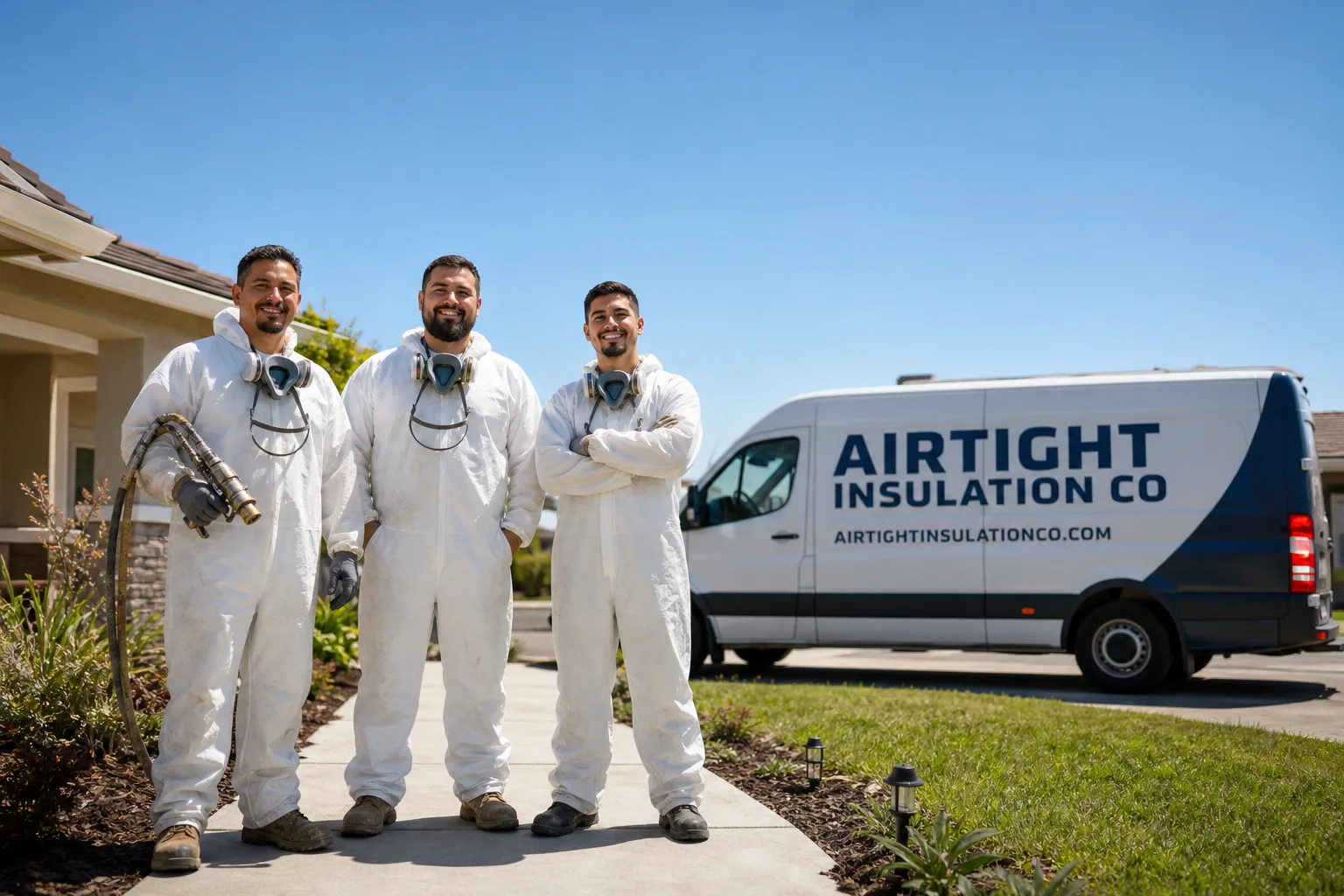
Fast, Reliable Spray Foam Insulation Across Silver Lake
Spray foam insulation in Silver Lake typically costs $2,400 – $6,800 for an attic and $4,800 – $11,500 for full wall retrofits, with most homes we service dating to the 1920s and 1930s. We run crews into Silver Lake from Las Flores throughout the week, and most jobs near the reservoir or along Sunset Boulevard get a site visit within 24 hours of your call. If you’re dealing with a west-facing bedroom that bakes by 3 p.m. or a draft that moves through your Spanish Revival like the windows are open, call Ruben Acosta and the team at (833) 390-7079. We’ll diagnose what’s actually happening in your walls and attic, then recommend the right foam for the framing you actually have.
Why Airtight Insulation Co Is Silver Lake’s Preferred Spray Foam Insulation Company
Silver Lake homes demand more from an insulation contractor than a spec sheet and a rig. The housing stock here is overwhelmingly 1920s Spanish Colonial and Craftsman bungalows framed in shallow 2×4 with lath-and-plaster walls, plus a scatter of hillside dingbats and mid-century post-and-beam builds. That means almost every job is a retrofit into framing that was never designed for insulation. We’re not topping up anything. We’re working from scratch in cavities that are shallow, irregular, and often inaccessible from the street.
Our Spray Foam Insulation team has hauled proportioners up the public stair streets above the reservoir and fed hose over rooflines when there was no attic hatch facing the street. That’s normal work in this neighborhood. It’s also why we carry both Icynene and Demilec open- and closed-cell foams: the material choice has to match the depth that actually exists in your stud bays, not the depth a textbook assumes. Ruben Acosta built this company around that principle. The job picks the product.
Spray Foam Attic Insulation in Silver Lake
Spray foam attic insulation in Silver Lake usually means foaming rafter bays in a vented attic or air-sealing the attic floor before anything else gets installed. In Silver Lake, attics over 1920s bungalows and hillside dingbats are typically undersized, poorly vented, and brutally hot from inland-driven summer sun. Radiant heat through an uninsulated attic is the single biggest comfort problem in this climate. A full attic foam job in Silver Lake runs $2,400 – $6,800 depending on square footage and whether we’re doing open-cell under the roof deck or closed-cell in a tight, shallow space.
Rafter Bays and Roof Decks
When a Silver Lake attic is accessible and vented, foaming the underside of the roof deck turns the attic into conditioned space and cuts heat transfer from the roof itself. This matters most on west- and south-facing exposures along the hills above Glendale Boulevard, where afternoon sun hits roofs hard.
Air-Sealing Before Foam
Spraying open-cell foam into a vented attic over 1920s framing without air-sealing first traps moisture and lets hot attic air short-circuit the foam’s thermal performance. We seal the bypasses: top plates, chases, old knob-and-tube penetrations, and any gap where hot air moves through the ceiling plane. Then we foam.
Spray Foam Wall Insulation in Silver Lake
Spray foam wall insulation in Silver Lake is a retrofit job into 2×4 stud cavities that are often shallow, irregular, and sealed behind original lath-and-plaster. Closed-cell foam is frequently the only way to hit a real R-value in the depth that actually exists here. A wall retrofit on a 1920s Spanish Revival or Craftsman in Silver Lake runs $4,800 – $11,500 depending on how many exterior walls we’re treating and whether we’re drilling through stucco or going from the interior. We probe cavity depth before we ever load the proportioner.
Closed-Cell in Shallow 2×4 Framing
Closed-cell foam delivers roughly R-6.5 per inch, which means a true 2×4 cavity can reach R-24 to R-26 in a single pass. That’s the number Silver Lake homeowners need when the alternative is a thin fiberglass batt that does almost nothing against radiant heat from the sun.
Plaster Preservation and Stucco Matching
On a 1926 Spanish Revival off the stairways above the reservoir, the walls were original lath-and-plaster over shallow framing. We used Icynene closed-cell in the irregular stud bays, then patched and re-stuccoed the injection holes to match the original texture. Over-expansion is the enemy here. If a crew doesn’t probe depth first, the foam cracks the 1920s plaster and blows out the stucco keys. We don’t let that happen.
Trusted Brands We Service in Silver Lake
Airtight Insulation Co carries eight manufacturer brands so the recommendation always fits the job. In Silver Lake, where the framing is shallow and the access is tight, that means leaning on Icynene and Demilec for spray foam, with Owens Corning and Johns Manville batts available when a hybrid approach makes more sense. We stock the materials and tools needed for Silver Lake’s specific housing types, which means less delay when a hillside job needs another day of hose runs or a stucco patch that has to match. Eight brands, one contractor. The material decision is never made for inventory convenience.
Common Spray Foam Insulation Problems We See in Silver Lake Homes
- Over-expansion cracking original plaster. Silver Lake’s 1920s bungalows have lath-and-plaster walls over shallow 2×4 cavities. If a crew sprays without probing depth first, the foam expands and blows out the plaster keys. We probe every bay before foaming.
- No street-facing attic access. On the stair streets and alley-only lots around the reservoir, the attic often has no street-side hatch. Crews that aren’t set up for this skip proper masking or overspray the tuck-under garage ceiling. We haul equipment up public stairs and feed hose over rooflines as standard practice.
- Open-cell foam in a vented attic without air-sealing. Spraying open-cell into a vented attic over unsealed knob-and-tube-era framing traps moisture and lets hot inland air short-circuit the foam’s R-value. Air-sealing comes first, always.
- Dingbats with tuck-under garages. The dingbats above Silver Lake Boulevard have exposed post-and-beam soffits and garage ceilings that get oversprayed when crews rush. Different foam, different masking, different plan for the garage zone than the living space above.
Pricing for Spray Foam Insulation in Silver Lake, CA
Silver Lake pricing reflects access and framing, not just square footage. An attic job runs $2,400 – $6,800. Wall retrofits run $4,800 – $11,500. Rim joist and garage ceiling work falls between $900 and $2,900 depending on how much staging and masking the job requires. Homes on the stair streets cost more because equipment transport adds labor hours, and 1920s plaster work adds patching time. The honest answer is that a 1,100-square-foot Craftsman on a flat lot off Hyperion costs less than a 1,400-square-foot Spanish Revival above the reservoir, even if the attics are the same size. We’ll give you a written number after a site visit, not a phone guess. Estimates are free. Call (833) 390-7079 to get one on our calendar.
We Also Serve Cities Near Silver Lake
We run crews daily from our Las Flores location, which puts Echo Park, Los Angeles, Koreatown, and Hollywood all within easy reach. If you own a rental property or flip homes across multiple neighborhoods, we can handle the whole corridor without coordinating multiple subs. For a full look at our work in this part of the city, start at Silver Lake.
Serving Silver Lake, CA — Our Local Coverage Area
We’re based in the Silver Lake area and know this community well. Use the map below to see our service coverage — if you’re nearby, we can almost certainly help.
FAQs About Spray Foam Insulation in Silver Lake
Yes. We haul the proportioner and hose up the public stairways and feed the line over the roofline to foam the rafter bays from above. This is standard operating procedure on Silver Lake’s stair streets, not an extra. Call (833) 390-7079 and tell us which stair street you’re on; we’ll confirm access before the site visit.
Yes, and in most cases closed-cell foam is the only material that hits a meaningful R-value in a true 2×4 cavity. At roughly R-6.5 per inch, closed-cell gets you to R-24 to R-26 where fiberglass batts would give you half that. The material choice is driven by the depth that exists, not a preferred product.
We probe every stud bay before we spray, and we control expansion by working in lifts rather than filling the cavity in one pass. On the 1920s lath-and-plaster homes around Sunset Junction, this is the only way to foam without blowing out the plaster keys. We also patch and re-stucco injection holes to match the original texture.
Yes. The open-framed post-and-beam soffits and the garage ceiling itself need closed-cell foam with different masking and staging than the living space above. We plan the garage zone as its own scope, because overspray on a dingbat’s exposed framing is a common mistake we see from crews that treat the whole building the same.
Often yes, but it depends on whether the beams are structural and how much roof deck area is exposed. Closed-cell foam on the underside of the roof deck can work, but it changes the look, so we’ll walk you through what’s possible and where the trade-offs are. We’ve done enough post-and-beam work in the hills above the reservoir to know when foam makes sense and when a different approach does. Call (833) 390-7079 for a straight answer on your specific ceiling.
Most Silver Lake properties get a site visit within 24 hours of your call. We run crews from Las Flores throughout the week, and the neighborhood is close enough that we can often schedule same-week work. Emergency calls, like a failed insulation job that’s left a home exposed, get priority routing.
Seal it, not just fill it. That’s the standard we work to on every Silver Lake home, whether it’s a 1926 Spanish Revival off a stair street or a mid-century post-and-beam above the reservoir. Call (833) 390-7079 for a free estimate and a straight answer on what your house actually needs.
Written by Ruben Acosta, Owner at Airtight Insulation Co, serving Silver Lake and surrounding Los Angeles neighborhoods.