Fast, Reliable Attic Insulation Across Lakewood
Most Lakewood homes were built between 1950 and 1953, which means your attic insulation is now 70-plus years old and doing far less than you think. We’re Airtight Insulation Co, and we retrofit original Lakewood Plan tract homes throughout 90711, 90712, 90713, and 90714. Our crews know these floor plans block by block because the homes repeat themselves. When you call (833) 390-7079, you’ll reach a team that has worked on hundreds of attics just like yours on streets just like yours. We diagnose what’s actually failing, recommend the material that fits the job, and seal it, not just fill it.
Why Airtight Insulation Co Is Lakewood’s Preferred Attic Insulation Company
Lakewood homeowners call us because we understand the Lakewood Plan housing stock in a way a general contractor from outside the area cannot. The 17,000-plus original tract homes off streets like Del Amo Boulevard, Candlewood Street, and Paramount Boulevard share identical wall cavity depths, identical roof pitches, and identical attic ventilation layouts. We know what’s in those attics before we even open the access hatch.
We carry eight manufacturer brands: Owens Corning, Johns Manville, Knauf, Rockwool, CertainTeed, Icynene, Demilec, and GreenFiber. That range matters in Lakewood specifically because the right retrofit for a 1953 stucco ranch is often not the right retrofit for a 1960s two-story off Bellflower Boulevard. We let the job pick the product.
Ruben Acosta leads our team, and he’s built his reputation on diagnosing the real problem rather than defaulting to the cheapest material. When a Lakewood homeowner says their upstairs rooms run 10 degrees hotter than downstairs, we don’t just blow in more fiberglass. We check whether the original gable vents are still functional, whether salt air has corroded the fasteners, and whether the insulation has compacted to R-11 or less. That’s the difference between performance you can feel and another insulation job that underdelivers.
Radiant Barrier in Lakewood
Radiant Barrier in Lakewood is one of the highest-impact upgrades you can make to a 1950s tract home with a vented attic. A radiant barrier is a reflective foil product, typically stapled to the underside of roof rafters, that reflects radiant heat back out of the attic before it ever reaches your insulation. In Lakewood’s climate, where attic heat gain drives most summer cooling bills, this single product can cut attic temperatures by 20 to 30 degrees on an August afternoon.
At Airtight Insulation Co, we recommend radiant barrier most often to Lakewood homeowners whose air conditioner runs constantly from July through October. It’s a supplement to insulation, not a replacement. A typical radiant barrier installation in a 1,000-square-foot Lakewood attic runs $1,400 to $2,200, depending on rafter spacing and attic accessibility. The payback comes fastest for homes with air handlers or ductwork sitting in the attic itself.
Reflective Foil Stapled to Rafters
For Lakewood attics with standard 24-inch-on-center rafter spacing, we staple a double-sided perforated foil product across the rafters. The perforation prevents moisture trapping, which matters even in our dry climate because kitchen and bath vents often terminate in these older attics. That foam-backed or foil-faced material gets installed in one or two days for a typical Lakewood tract home.
Radiant Barrier Over Existing Insulation
Some Lakewood homeowners already have R-38 blown fiberglass but still feel heat radiating through bedroom ceilings on hot nights. In that case, we drape a reflective product directly over the existing insulation, or install it on the gable ends and roof face, depending on the attic’s ventilation layout. This is the fastest route to a measurable temperature drop without disturbing the current setup.
Attic Cleaning Services in Lakewood
Attic Cleaning Services in Lakewood almost always involve two realities: decades of dust and debris from original construction, and evidence of pests or rodents that found their way in through corroded vents. Many of the 1950s attics we open here haven’t been cleaned since the Eisenhower administration. Debris, old nest material, and compromised insulation all degrade air quality and reduce insulation effectiveness.
We provide full attic cleaning, including removal of old or contaminated insulation, rodent nesting debris, dust, and fallen soffit material from the attic floor and cavities. After cleaning, we recommend either a full replacement or a top-up depending on what condition the remaining insulation is in. A full attic cleaning in Lakewood, without insulation, typically runs $600 to $1,100 for a single-story tract home attic. With insulation removal and disposal, the range moves to $1,800 to $3,400, depending on square footage and how much material must be bagged and hauled out.
Removing Contaminated or Compaction-Flattened Insulation
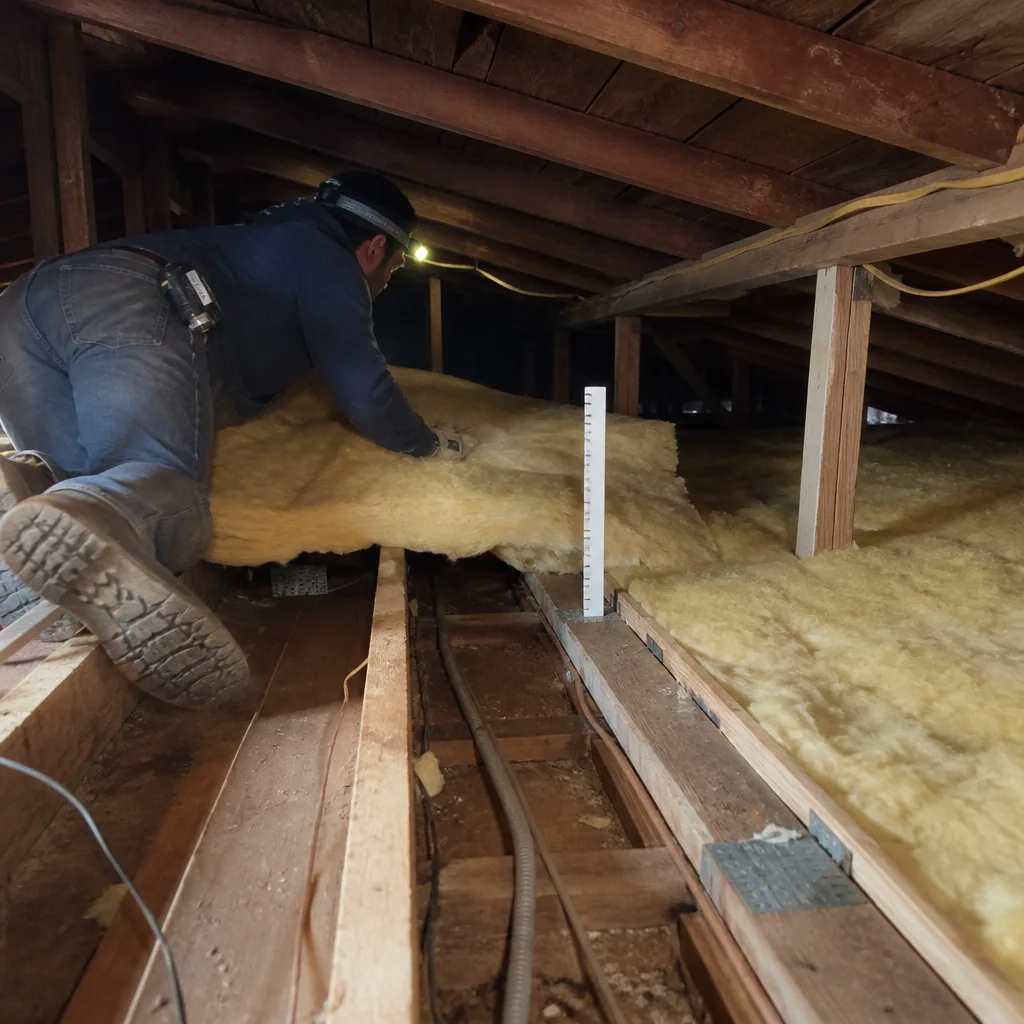
In Lakewood Plan homes, original attic insulation has usually settled into a compressed mat that measures R-11 or less. If rodents or roof leaks have contaminated that material, it’s not doing thermal work and it’s not healthy to leave in place. We remove it, sanitize the attic floor, and start fresh with new material matched to the home’s needs.
Cleaning Before Air Sealing and New Blown-In
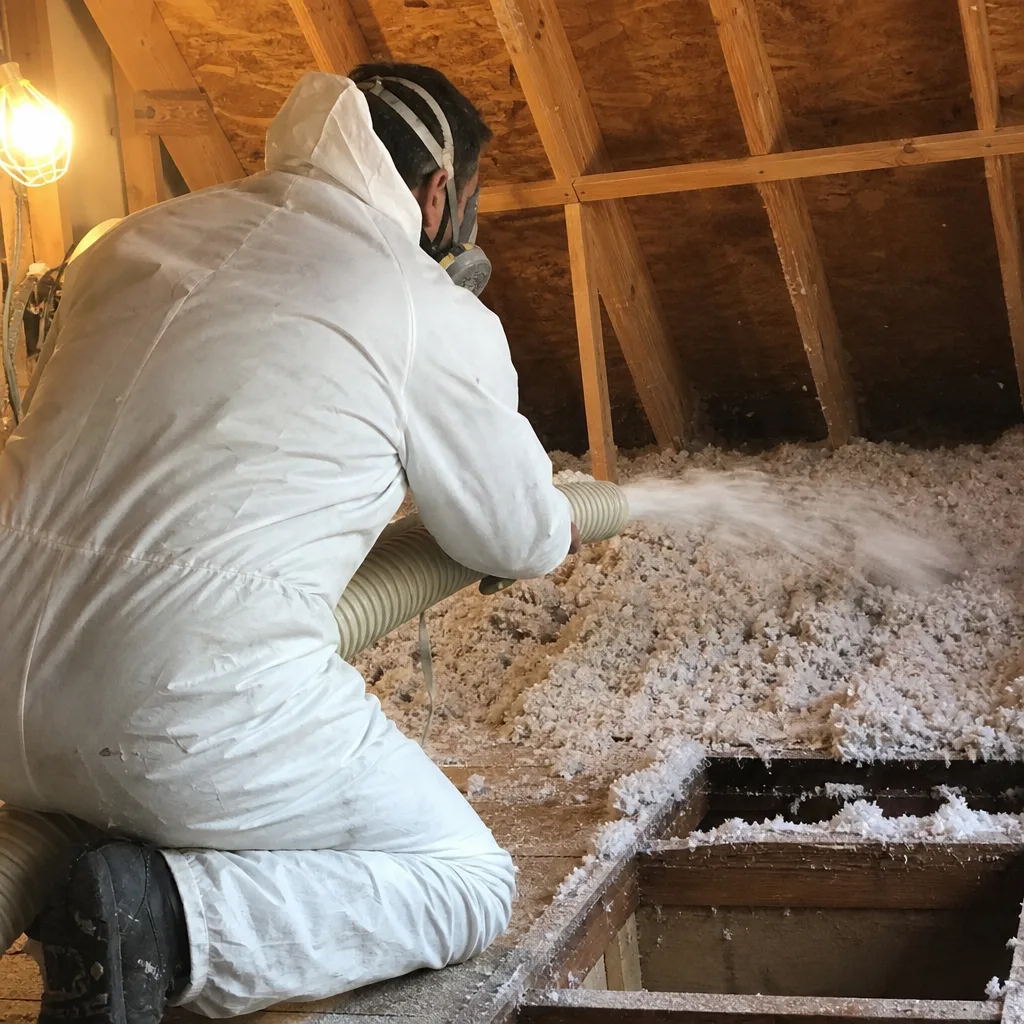
Before we blow in new Owens Corning or GreenFiber insulation in Lakewood, the attic floor needs to be clean enough to identify air leaks around ceiling penetrations, can lights, and partition top plates. Cleaning first means the air sealing step actually works. It’s the difference between sealing the envelope and just piling more fiber on top of old problems.
What happens when you call
- 1
A real person answersNo phone trees — you reach a local pro.
- 2
You get an upfront price rangeHonest numbers before anyone is dispatched.
- 3
A background-checked tech heads outLicensed & insured, dispatched right away.
- 4
You approve before work beginsNothing starts until you say go.
Trusted Brands We Service in Lakewood
We’re a multi-solution insulation specialist, not a one-product pusher. Our Lakewood jobs pull from a portfolio that includes Icynene and Demilec spray foam products, Owens Corning blown-in fiberglass, and GreenFiber cellulose for homeowners who want recycled-content material. We stock local parts and materials for Lakewood tract home retrofits, which means we don’t send a truck back to a warehouse in Long Beach every time a job needs a specific vent baffle or spray gun fitting. Eight brands, one contractor. For an attic upgrade in Lakewood, that means the material recommendation comes from what your attic actually needs, not from what happens to be sitting on our shelf.
Common Attic Insulation Problems We See in Lakewood Homes
- Compacted original insulation reading R-11 or less. The 1950s builders installed minimal material to start with, and seven decades of settling and foot traffic have flattened it. A home built in 1952 off Candlewood Street often has the same effective R-value today as a home built in 1962 off Bellflower Boulevard: too low.
- Salt-air corrosion on attic fasteners, vents, and the garage hardware below. Lakewood sits close enough to the coast that salt air works on metal year-round. We regularly see attic vent fasteners rusted through and garage door springs and hinges with heavy surface corrosion, which over time damages the attic access seals and insulation around the hatch.
- Undersized attic ventilation baking the insulation in summer. Lakewood Plan builders used a handful of standardized vent layouts across thousands of homes. When that layout is marginal, whole blocks suffer the same trapped heat in July and August, and the insulation gets heat-soaked instead of doing its job.
- Rodent entry through corroded gable or eave vents. Once a vent screen rusts out near the coast, rats and mice move in. Their nests compress and contaminate the insulation, and their traffic compacts it further. In Lakewood tract attics, this sequence is common enough that we check for it on nearly every inspection.
Pricing for Attic Insulation in Lakewood, CA
Here’s what Lakewood homeowners should expect to pay. A top-up of blown-in fiberglass over existing insulation in a typical 900 to 1,200 square foot attic runs $900 to $1,800. Full removal of old insulation and replacement with blown-in fiberglass or cellulose runs $3,200 to $5,800 in Lakewood, depending on attic size and access. Batt insulation replacement runs $1,700 to $3,400. Spray foam in an open attic roofline is the premium option, running $4,500 to $9,000 for a typical Lakewood tract home, with open-cell Icynene on the lower end and closed-cell Demilec on the higher end. Every quote is free. Call (833) 390-7079 and we’ll measure your attic, check the ventilation, and give you a specific number, not a vague range read from a national table.
We Also Serve Cities Near Lakewood
Our crews work throughout the Lakewood area and the surrounding communities. In addition to our Attic Insulation in Lakewood work, we regularly handle attic retrofits in Signal Hill, Bellflower, Long Beach, and Paramount. If you’re in one of those cities and your attic is underperforming, the same team and the same eight-brand material portfolio is available to you. Call (833) 390-7079 and mention your city.
Serving Lakewood, CA — Our Local Coverage Area
We’re based in the Lakewood area and know this community well. Use the map below to see our service coverage — if you’re nearby, we can almost certainly help.
FAQs About Attic Insulation in Lakewood
Lakewood’s position in the LA Basin coastal plain exposes metal hardware to salt air year-round, and the corrosion rate is noticeably higher than in cities further inland like Downey or Norwalk. Garage door springs, hinges, and opener chains are often the first visible failure, and when that hardware degrades, the misalignment can damage the attic access panel and the insulation seal around the hatch. We replace corroded springs with galvanized or coated options and recommend stainless hardware for hinges and fasteners. Call (833) 390-7079 if you’re seeing rust on your garage hardware; catching it early protects your attic seal too.
Look for rooms that run consistently hotter than the rest of the house in summer, cooling bills that climb year over year, visible dust or staining around ceiling penetrations, and insulation in the attic that sits below the top of the ceiling joists. If your home is original 1950s construction, the insulation has almost certainly compacted to R-11 or less. We’ll confirm it with a free attic inspection and tell you whether a top-up or full replacement makes more sense.
Yes, to a surprising degree. The Lakewood Plan developers used the same wall cavity depths, the same attic ventilation layouts, and the same materials across entire blocks. If your neighbor’s 1952 ranch has compacted R-11 insulation and a rusted gable vent, your 1952 ranch on the same street almost certainly has the same conditions. That uniformity also means our crews can work faster and more accurately; we already know your attic’s layout before the first ladder goes up.
Lakewood’s cooling load drives the equation, not heating. We recommend blown-in fiberglass to R-38, a radiant barrier on the rafter undersides for heat reflection, and proper attic ventilation to move hot air out. Vapor barrier concerns are minimal in this dry climate, so the money goes toward heat gain control. Mineral wool like Rockwool is a good add-on for fire resistance and soundproofing along party walls in attached tract homes.
We recommend an attic insulation and ventilation check every three to five years for Lakewood tract homes, and an annual visual check of garage door springs, hinges, and opener chains given the coastal salt-air exposure. Garage hardware corrodes fast here; attic insulation fails slowly. Catching both early saves you from paying for a full insulation replacement that a slow leak or rusted vent could have prevented. Estimates are free, so call (833) 390-7079 and we’ll take a look.
Written by Ruben Acosta, Owner at Airtight Insulation Co, serving Lakewood and the surrounding communities.